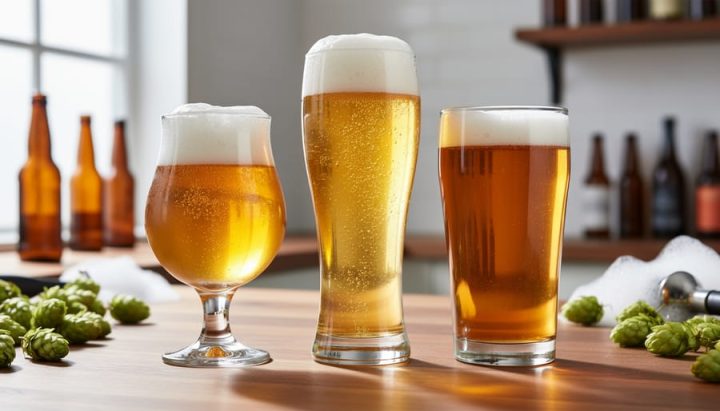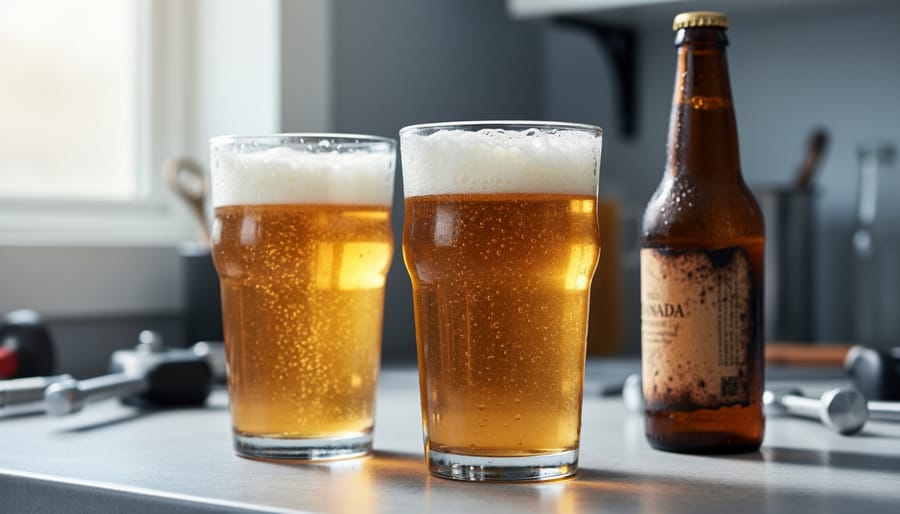
A standard Canadian pint glass holds 16 ounces, and that number is the one to check first when you’re shopping for an oz beer glass. Most sets sit between 16 and 17 ounces, which is enough room for a 473 ml tallboy with a little headspace left over for foam. Go smaller and you’ll be topping up mid-pour. Go much bigger and your carefully brewed pale ale goes flat before you finish it.
In the interest of transparency, we earn a commission on some purchases made through links on this site. As an Amazon Associate I earn from qualifying purchases.
Ounce capacity matters more than it sounds. It decides how much of a batch fits in the glass, how the head forms, and whether a bottle or can pours cleanly without overflowing. Homebrewers feel this most when they’re pouring a test sample for friends or comparing two versions of the same recipe side by side.
This guide walks through the sizes, shapes, and materials worth knowing, then compares eight sets, from the 1.2 Pint Glasses Set of 6 for Home to the Amazon Basics Pint Glasses so you can match a glass to how you actually drink. It’s the same practical thinking you’d bring to brewery interview questions: ask what you really need before you buy.
Got a favourite glass that’s lived through years of backyard get-togethers? Tell us in the comments.
Why Ounces Matter When You Pour Your Own Beer
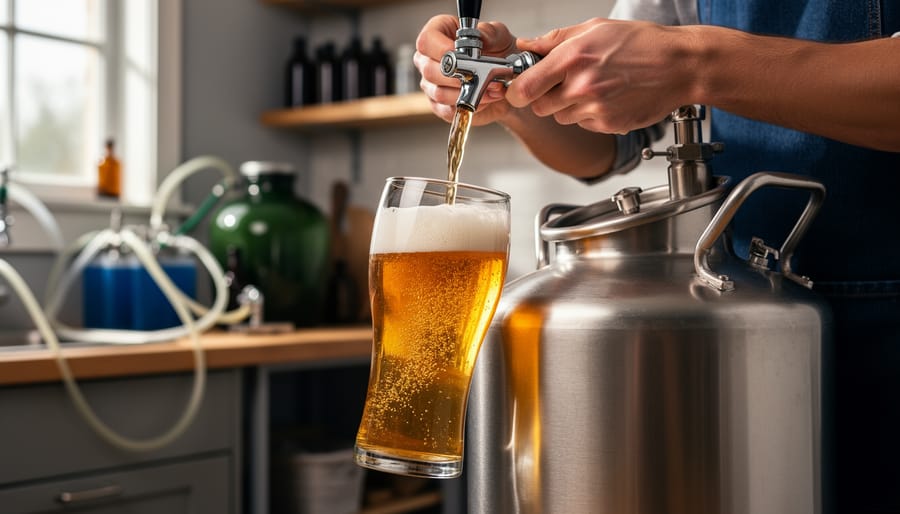
An “oz beer glass” is simply a glass sold by how much liquid it holds in ounces. That number tells you a lot once you’re the one filling it from your own batch.
Say you’ve bottle-conditioned a fresh pale ale. A 12 oz bottle, a 16 oz pint and a 20 oz mug won’t pour the same way. The ounce size decides how many glasses a bottle gives you, how much headroom you have for foam, and whether a stronger beer lands as a sensible serving or a surprise. A hefty imperial stout wants a smaller pour than a light lager you’re sipping through a long afternoon. If you want to go deeper on how beer glass dimensions shape the pour, that’s worth a read.
A quick word on units. A US fluid ounce is about 29.6 millilitres, and a 16 oz glass is the common pint size. Here in Canada you’ll see both: imported glasses are marked in ounces, while plenty of domestic ones use millilitres, like the 500 ml lager mugs and 700 ml pilsner glasses sold by some retailers. It’s the same idea, just a different ruler.
Here’s the catch. Stated capacities vary by maker, and brim-full volume isn’t the same as the fill line. A glass labelled 16 oz might hold a touch more when topped to the rim, but you’ll never pour it that way once you leave room for head. So treat the number as a guide, not a guarantee, and test one glass with a measured pour before you plan a whole tasting night around it.
Key Buying Factors for Beer Glasses
Not every glass that holds your beer is worth owning. A few practical factors separate a glass you’ll reach for every week from one that gathers dust, and each ties back to how you actually pour at home.
Start with capacity. A standard pint is 16 oz, but some mugs run to 20 oz, and highball-style tumblers can be smaller. Canadian glassware is often marked in millilitres, so a 473 mL glass is the metric twin of a US pint. Remember that brim-full and fill-line volumes aren’t the same, and you want headroom for foam.
Here’s a quick checklist to carry into the store or the cart:
- Capacity: match the stated ounces or mL to your pour, leaving room for head.
- Set size: pairs suit couples, while a half-dozen or dozen covers a club meeting.
- Material: regular glass is sturdy and affordable, while lead-free crystal is lighter and clearer.
- Durability: look for heat-tempered or break-resistant wording for heavy use.
- Rim and walls: a thick rim survives clinking, while thin walls feel more refined.
- Handle: handled mugs keep warm hands off the glass, while straight glasses stack and store easily.
- Dishwasher safety: confirm it, especially if you host often.
- Stackability: straight sides save cupboard space in a small kitchen.
- Form factor: pint, pilsner, can-shaped or highball, chosen for the style you pour.
Think about the scene you’re buying for. A basement tasting night with a few friends rewards a smaller set of nicer glasses. A backyard gathering is where tempered, break-resistant glass earns its keep, since someone will inevitably knock one over. And if you’re pouring a fresh all-grain beer for a crowd, a bigger set saves you from washing between rounds.
Material and shape matter too. Lead-free crystal is lighter and has a crisp look, but regular glass often tolerates rough handling better. Thick walls hold temperature longer, which is nice for a lager, while thinner rims feel gentler on the lip.
Finally, be honest about storage. A dozen glasses sounds great until they won’t fit in your cupboard. Pick the size and shape your kitchen and your brewing habits can really live with.
Pints, Mugs, Pilsners and Can Glasses: Types Compared
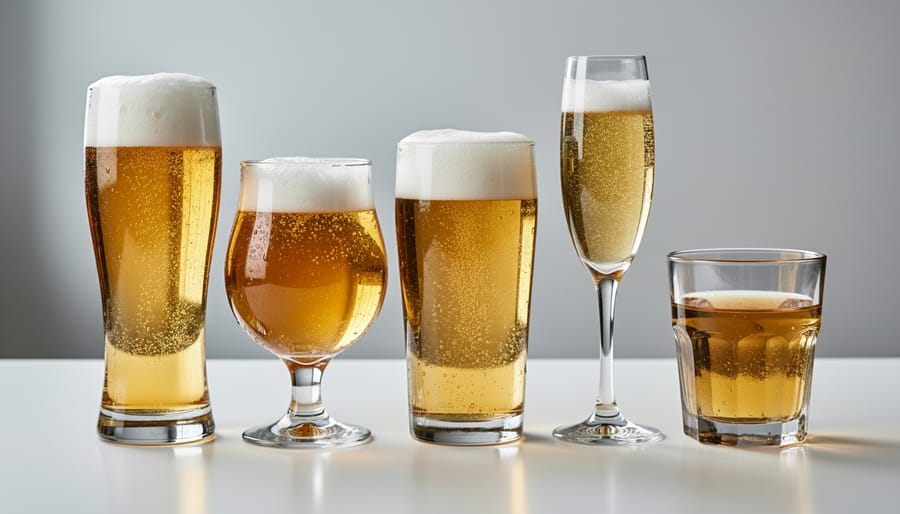
Glass shape does more than look good on a shelf. It changes how your homebrew smells, how long the head hangs around, and how comfortable the glass feels after a few rounds at a tasting night. Here’s how the main types stack up before we get into the details.
| Glass type | Typical capacity | Best suited to | Handle | Key consideration |
|---|---|---|---|---|
| Straight pint glass | About 16 oz | Lagers, ales, stouts | No | Easy to stack and replace |
| Dimple stein or freezer mug | 16 oz and up, often 20 oz | Ales, bitters, crisp lagers | Yes | Bulky to store; chilling can mute aroma |
| Pilsner-style glass | About 16 oz | Pilsners, light lagers | No | Tall shape shows clarity and bubbles |
| Can-shaped glass | About 16 oz | Light session beers | No | Fun, but less aroma focus |
| Highball tumbler | Often under 16 oz | Shandies, radlers, light beers | No | Smaller pour, versatile for other drinks |
The straight pint is the workhorse. It’s forgiving, and the common 16 oz size leaves room for a decent head on a lager, a pale ale or a stout. It won’t concentrate aroma the way a tulip would, but for everyday pouring it’s hard to beat.
Handled mugs are all about comfort and warmth control. A dimple stein keeps your hand off the glass, which suits slow-sipping ales. Freezer mugs commonly run larger than a pint, so a pour that looks modest can actually be more beer than you planned. Just remember that a deep chill dulls the subtle flavours you worked hard to build.
Pilsner glasses taper upward, which supports a firm head and lets you admire the clarity and carbonation of a clean lager. If you brew crisp, pale styles, this shape earns its shelf space.
Can-shaped glasses are casual and playful, with a wide straight mouth that sends less aroma your way. They suit easy session beers rather than hop-forward IPAs. Highball tumblers lean the same direction, and they usually pour smaller. If you’re curious about going even smaller for stronger brews, our guide to 8 oz beer glasses explains when a tiny pour makes sense.
Which shape do you reach for most often? Tell us in the community.
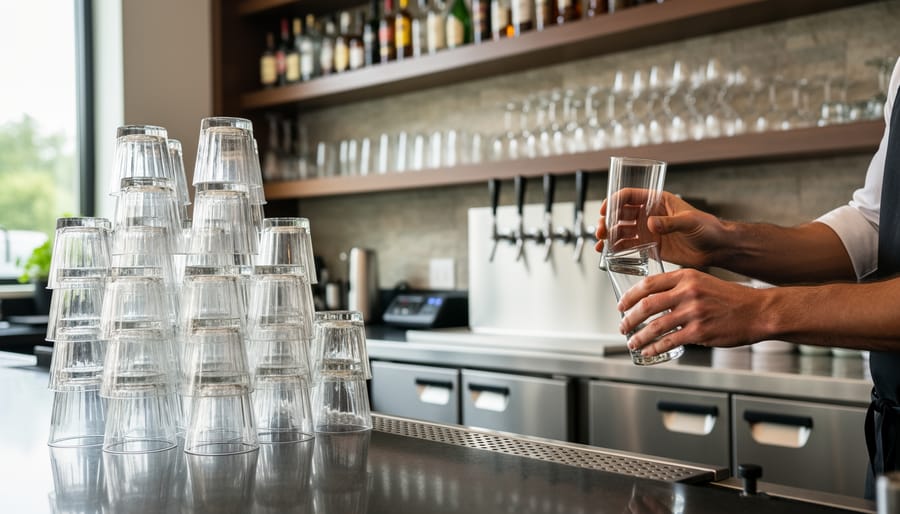
Our Picks: Eight Beer Glass Options Worth Considering

We grouped the eight glasses below by shape and purpose, so you can jump straight to the style that fits your basement bar. Each one is judged on four things: capacity in ounces, durability, set size, and how well it suits pouring your own homebrew. The customer ratings we mention are there for context only, and they’re no substitute for your own taste test. Poured one of these yourself? Add your experience in the community.
1.2 Pint Glasses Set of 6 for Home: A Practical Everyday Set

If you’re just starting to build a glass collection, this 1.2 Pint Glasses Set of 6 is about as simple and practical as it gets. It’s a plain, food-grade clear glass made for everyday use at home, no frills and nothing fancy to fuss over. That’s honestly part of the charm: you can pour a pale ale, a lager, or your latest stout and let the beer be the star.
The six-piece count is the real win here. Six glasses means a small homebrew club night or a few friends over for a basement tasting won’t have you washing glasses between rounds. Buyers seem happy with it too, rating it 4.6 out of 5 from 495 customer ratings, and it’s currently in stock.
This set suits beginners best, especially anyone who wants a dependable starter lineup without overthinking it. One honest consideration: the listing doesn’t spell out detailed specs beyond the title, so if you care about an exact fill line or a precise ounce capacity, check the product page before you buy. For a straightforward everyday glass, though, it covers the basics nicely.
1 Pint Dimple Stein Glass Beer Mug: A Classic Handled Option
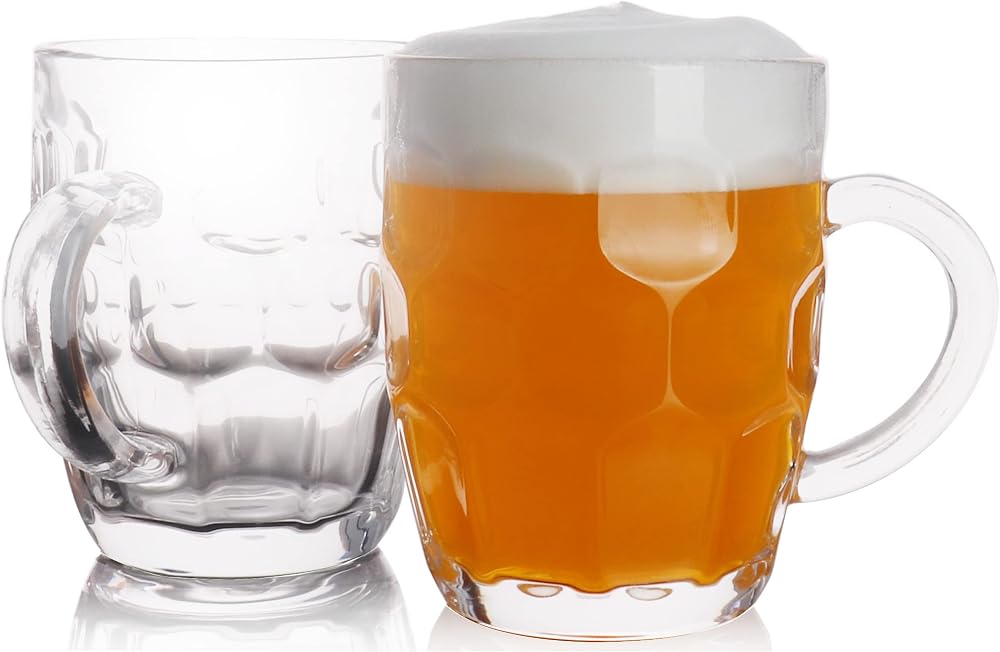
A dimple stein is the glass you reach for when you want the beer to feel like part of the evening, not just something in your hand. This British-style pint mug is thick, handled, and sold as a set of 2, so it’s easy to pour one for yourself and one for whoever’s sitting in on your tasting. It’s currently listed as in stock, with a 4.7 out of 5 rating from 203 customer ratings.
The handle is the real draw. Hold a cold pint glass in your palm for twenty minutes and your beer warms up fast. A handled stein keeps your hand off the bowl, which suits ales and bitters, styles that taste better with a bit of warmth anyway. If you’ve got a cask-style bitter or a malty brown ale in the fermenter, this is a natural match. The heft also makes it feel sturdy for everyday use, which counts when the glass is going back and forth between the basement and the kitchen.
Two things to think about. Handle comfort is personal, so if you’ve got large hands, a narrow handle may feel snug. And handled mugs take up more cupboard room than straight-sided pints, since they don’t nest or stack as neatly.
Beer Glasses Can Shaped Glass Cups Highball Glasses: A Playful Pour

This four-piece set of can-shaped glasses is the playful one in the lineup. Each holds 16 oz, the same volume as a standard pint, so you can swap it in without rethinking your pours. The shape mimics a beer can, which makes it a fun fit for light lagers, cream ales, and casual backyard sessions where nobody’s analyzing the nose.
Here’s the practical upside: it’s not only a beer glass. The straight, tall form works just as well for iced coffee and iced tea, so the set earns its cupboard space on days when the keg is empty.
On ratings, it sits at 4.6 out of 5, but that comes from just 7 customer ratings. That’s a thin sample, so treat it as a friendly signal rather than a verdict. It’s in stock at the time of writing.
One honest consideration is aroma. The straight sides and wide opening let volatile hop and malt notes escape quickly, so this shape is less flattering for a fragrant IPA or a delicate saison. Think of it as a novelty with a job to do, best matched to crisp, easy-drinking brews.
16oz Pilsner Beer Glasses Set of 6: A Lager Lover’s Pick
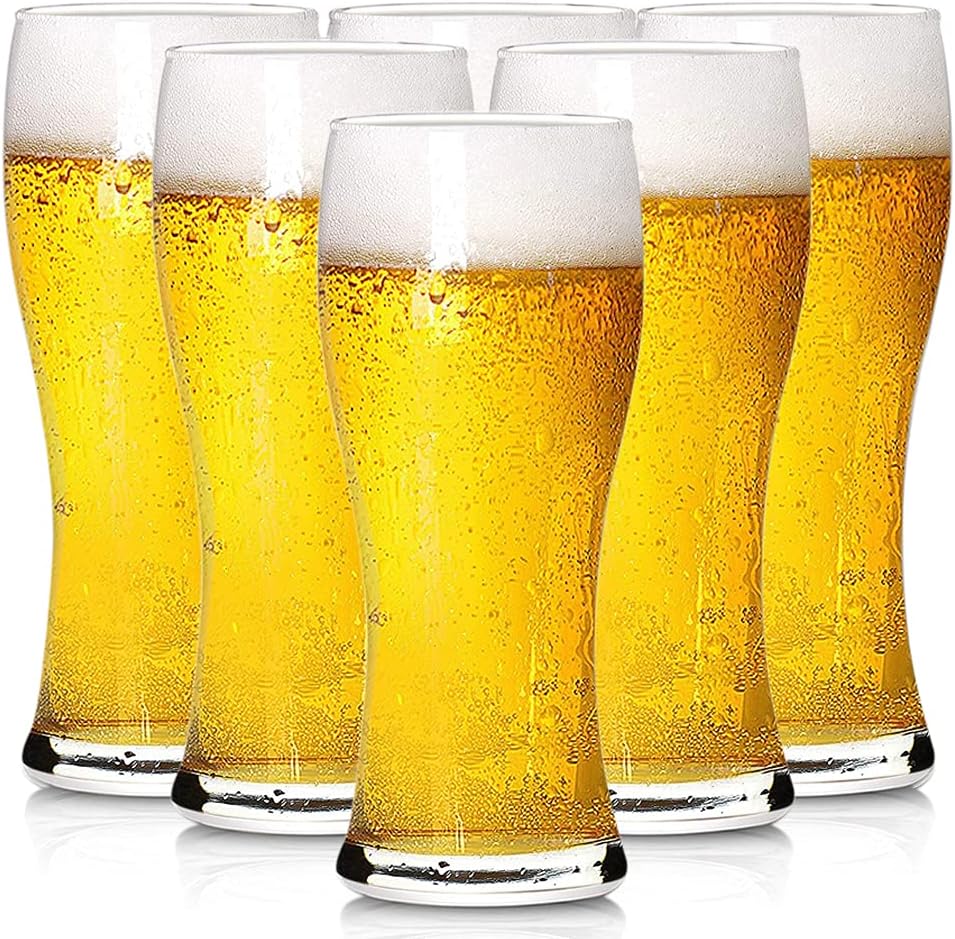
If you brew lagers or pilsners, this six-piece 16 oz set is worth a look. The 16oz Pilsner Beer Glasses Set of 6 for Home, Food-Grade Pint Glasses carries a 4.6 out of 5 rating from 495 customer ratings, and it’s listed as in stock. That’s a solid vote of confidence for a glass you’ll reach for often.
The appeal comes down to shape. A pilsner-style glass is built to show off what you worked hard to make. A clean, pale lager looks its best when you can see the clarity and watch the bubbles stream upward, and a tall, narrow-ish profile makes both easy to spot. It also keeps the foam stacked up on top rather than letting it spread thin. Since it’s food-grade glass, it suits everyday home drinking just fine.
Here’s a pouring tip that works with any glass like this. Start with the glass tilted at about 45 degrees, pour down the side, then straighten it as it fills so the last bit lands in the middle. That final splash builds a creamy head, which carries aroma to your nose.
One honest consideration: six tall glasses take up real shelf room. Measure your cupboard height before you commit, especially in a smaller Canadian kitchen or a basement bar nook.
Necessia Heat-Tempered Durable Rim Pint Beer Glasses: Built for a Crowd

If you’re pouring for a full house, the Necessia Heat-Tempered Durable Rim Pint Beer Glasses are the one to look at. It’s a set of 12 at 16 oz each, the common pint size, so there’s enough for a club meeting, a backyard party, or a basement tasting night without anyone waiting on a clean glass.
What earns its place here is the construction. Heat-tempering and a durable rim are exactly what you want when glasses get passed around, knocked together, and run through the dishwasher again and again. The rim is the part that usually chips first, so a reinforced one matters when you’re washing a dozen glasses after every gathering.
It sits at 4.2 out of 5 from 38 customer ratings and is currently in stock. That’s a modest number of reviews, so treat the score as a general signal rather than gospel.
The honest consideration is storage. Twelve pint glasses take up real cupboard or shelf space, and if your kitchen is on the small side, you’ll want a plan for where they live. If you host often, though, this is the practical pick for pouring for many people at once.
Beer Mugs For Freezer: A Frosty 20 oz Pour

These 20 oz heavy glass mugs with handles come as a set of four, and the freezer is the whole pitch. Chill them ahead of a get-together and you’ve got a frosty vessel ready for a crisp lager or a light summer ale. Customers rate them 4.5 out of 5 from 251 customer ratings, and they’re listed as in stock.
Size is the first thing to notice. At 20 oz, these hold noticeably more than a standard 16 oz pint, so a full pour from your batch will empty a bottle faster than you expect. Plan your portions, especially with a stronger brew, and leave a little room for head.
Now the caution. Freezing a mug can work against you. Ice-cold glass dulls aroma and can mute the subtle flavours you worked hard to build, and delicate styles like a pale ale, a saison, or a malty amber can taste flat when over-chilled. Keep these mugs for your lightest, crispest beers, and give them a quick rinse and dry before pouring so frost doesn’t water down the first sip.
Handle comfort is personal, so check the grip if you have big hands.
JoyJolt Faye Highball Glasses Set of 6 Tall Drinking Glasses: The Versatile Crossover

The JoyJolt Faye set is the odd one out in this roundup, and that’s a good thing. These six tall highballs are made of lead-free crystal and hold 13 oz, so they cover a lot more ground than beer alone. Pour a light session beer, a shandy or a radler and the slim, tall shape shows off the bubbles nicely. When the beer’s gone, the same glasses handle a mojito, a Tom Collins, bourbon over ice or a big jug of iced tea.
Here’s the catch: 13 oz is noticeably smaller than a standard 16 oz pint. If you fill one to a proper pour and leave room for a bit of head, you’ll end up with a little less beer than you’d get in a pint glass. That works well for a low-ABV batch you want to sip slowly, or for a tasting flight with friends, but it’s not the glass for a thirsty Saturday afternoon.
The rating is the most reassuring part. It sits at 4.4 out of 5 from 6,267 customer ratings, the biggest pool of feedback in this guide, and it’s listed as in stock. If you want one set that does double duty on the bar cart and at the brew table, this is a smart crossover pick.
Amazon Basics Pint Glasses: A Straightforward Metric-Marked Set

If you think in millilitres, the Amazon Basics Pint Glasses make the math easy. Each glass is listed at 473.2 mL, which is the metric equivalent of a US pint, so you’re pouring a true 16 oz without any conversion headaches. The set comes as four pieces, and they’re dishwasher-safe, which matters when you’re already washing carboys, buckets, and bottles after a brew day.
Customers have rated this set 4.6 out of 5 from 216 customer ratings, and it’s currently in stock. That’s a solid showing for a plain, no-fuss glass.
Think of this as the starter set. If you’re new to homebrewing, you don’t need anything fancy to taste your first batch properly. A straight-sided pint glass shows off colour and clarity, gives you room for a decent head, and handles just about any ale or lager. Maybe you’ve just moved up to an electric brewing system and want something simple to pour the results into. This fits.
One honest consideration: four glasses won’t stretch far at a club night, so you may want a second set down the road.
Key Details at a Glance: Capacity, Materials and Set Size
Before you buy, it helps to see the numbers side by side. The table below pulls together what each of the eight glasses lists for capacity, build, and handle, along with the customer ratings from earlier in this guide.
| Glass | Set size and capacity | Build and handle | Rating |
|---|---|---|---|
| 1.2 Pint Glasses | Set of 6, pint size | Food-grade clear glass, no handle | 4.6 (495) |
| Dimple Stein Mug | Set of 2, 1 pint | Glass, handle | 4.7 (203) |
| Can Shaped Glasses | Set of 4, 16 oz | Glass, no handle | 4.6 (7) |
| Pilsner Glasses | Set of 6, 16 oz | Food-grade glass, no handle | 4.6 (495) |
| Necessia Pint Glasses | Set of 12, 16 oz | Heat-tempered, durable rim, no handle | 4.2 (38) |
| Freezer Mugs | Set of 4, 20 oz | Heavy glass, handle | 4.5 (251) |
| JoyJolt Faye Highballs | Set of 6, 13 oz | Lead-free crystal, no handle | 4.4 (6,267) |
| Amazon Basics Pints | Set of 4, 473.2 mL | Dishwasher-safe glass, no handle | 4.6 (216) |
A few patterns jump out. Sixteen ounces is the common ground for pint and pilsner-style glasses, mugs stretch to 20 oz, and the crystal highballs run smaller at 13 oz. Standard glass dominates the list, while lead-free crystal appears once, and one option is heat-tempered for heavy use. Set sizes run from pairs all the way to a dozen, so think about storage before you commit.
Keep in mind that ratings with few reviews are a thin sample, and I’ve left out exact fill lines because makers don’t always state them. If you want more perspective before choosing, the brewer interview learnings offer a helpful look at how other brewers think about serving their beer.
Which Glass Should You Pick? Recommendations by Brewer and Situation
If you only want one answer: start with the 1.2 Pint Glasses Set of 6 for Home. It’s a practical, no-drama everyday set, and six glasses cover most basement tasting nights. The Amazon Basics Pint Glasses are another easy starter, especially if you think in millilitres, since they’re listed at 473.2 mL.
Brewing a crisp lager or pilsner? The 16oz Pilsner Beer Glasses Set of 6 shows off clarity and carbonation nicely. Prefer something with a handle for a long ale session? The 1 Pint Dimple Stein Glass Beer Mug is the classic pick, and it comes as a pair, which is handy if you’re sharing a pour with a brewing buddy.
Hosting a club meeting or backyard party? The Necessia Heat-Tempered set of 12 is built for crowds and heavy washing. If you want one glass that also works for shandies, radlers and iced tea, the JoyJolt Faye Highball Glasses are the versatile crossover, just remember they hold 13 oz, so a full pint won’t fit.
The honest approach is to match the glass to whatever’s in your fermenter, not just what looks good on a shelf. And if you’ve found a combination that works for you, tell us about it in the Canadian Brew community. Fellow brewers love swapping glass-and-beer pairings.
Common Mistakes to Avoid When Buying Beer Glasses
Here’s where I see homebrewers trip up most, and none of it is a character flaw. These are easy traps.
Assuming every “pint” is the same. It isn’t. A US pint is 16 oz, but some glasses sold as pints run larger or smaller, and the imperial pint many of us remember from pubs is bigger still. Check the stated capacity rather than the word on the box.
Closely related is ignoring ounces versus millilitres. Labels mix both, so a quick conversion before you buy saves a mismatch with your bottle-conditioned batch sizes.
Another is buying a set of twelve with nowhere to put it. A dozen glasses sounds great until your cupboard says otherwise. Be honest about your storage.
Freezer mugs trip people up too. Chilling a delicate pale ale or lager can mute its aroma and numb the flavour you worked weeks to build. Save the frosty mug for crisp, light styles.
Be gentle with fragile glass in the dishwasher. Harsh cycles can cloud thin or crystal pieces over time, so check what the maker recommends.
Don’t lean too hard on a star rating built on a handful of reviews, either. A 4.6 from seven people tells you less than a 4.4 from thousands.
Finally, there’s the quiet head-killer: residue. Leftover soap film or oils flatten foam fast.
Skipping those habits is the easiest way to waste a good pour.
Beer Glass Questions Canadian Homebrewers Ask
Got a glass in hand and a question about it? Here are the ones that come up most often in our community.
How many ounces are in a standard pint glass?
A standard US pint glass holds 16 fluid ounces, which matches the 16 oz capacity listed on several of the glasses in this guide. Brands vary a little, so check the box or the base if the exact volume matters to you.
Is a Canadian pint the same as a US pint?
Not always. Many Canadian bars pour in imperial pints or in metric sizes, while most glassware sold as a “pint” is the 16 oz US size. If you think in millilitres, a set marked 473.2 mL is the metric match for a US pint.
Does glass shape change how beer tastes?
Shape won’t change the beer itself, but it affects aroma, head retention and how the beer feels as you sip. A tall pilsner shape shows off clarity and carbonation, while a straight pint is a flexible all-rounder.
Can I put beer glasses in the freezer?
Freezer mugs are made for it, and a frosty mug suits crisp lagers. Chilling dulls aroma and can over-chill delicate styles, so skip it for anything you brewed to be savoured.
A couple of quick follow-ups. On crystal versus regular glass, lead-free crystal tends to feel lighter and more refined, but standard glass is perfectly good for everyday pours, and heat-tempered glass holds up better to heavy use. For cleaning, wash beer glasses with a mild, rinse-friendly soap and rinse them really well, because leftover residue from soap or oils is a classic head-killer. Let them air dry rather than wiping them with a greasy towel.
Still wondering about something we didn’t cover? Ask away in the Canadian Brew community, because chances are another brewer has wrestled with the same thing.
So here’s the short version: a 16 oz pint glass is the dependable default for most homebrewers, and everything else comes down to matching the glass to the beer and the occasion. A tall pilsner-style glass for your crisp lager, a handled stein for a malty ale, a sturdy tempered set when the whole club shows up. Check the ounces or millilitres, think about storage, and don’t overthink the rest.
That’s really the heart of good glassware for beer consumption. The right vessel doesn’t make a beer, but it does let your hard work shine, from the head to the aroma to the first cold sip.
Now we’d love to hear from you. Which glass is your favourite, and what was the first beer you ever poured into it? Share your story with the Canadian Brew community, and take a look at the membership resources for more brewing and tasting tips. Cheers, and happy pouring!