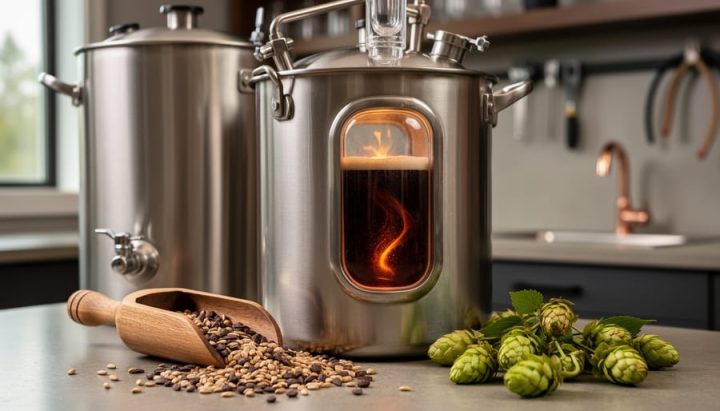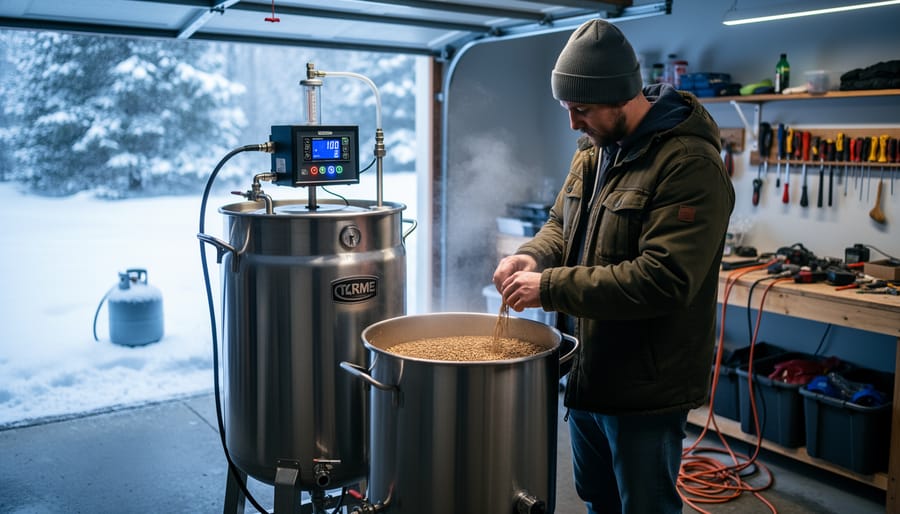
An all grain electric brewing system is a compact, plug-in setup that lets you mash crushed malted barley, boil the wort, and often chill and ferment it, all using electric heating elements instead of a propane burner or gas stove. A control panel holds your mash temperature steady, so you’re not babysitting a pot or guessing at a flame. Most systems are built around one to three vessels, and many handle a full batch in a single kettle.
Why does that matter? Brewing from raw grain instead of extract gives you control over every step that shapes a beer’s body, colour, and flavour. It’s also usually cheaper per batch once the gear is paid for. Electric adds something Canadian brewers know well: you can brew in the garage in February, in an apartment kitchen, or in the basement without venting fumes or hauling a propane tank through the snow.
This guide walks through how these systems work, the main types and components, the power questions worth sorting out before you buy, and how they fit into real brew days. Whether you’re a first-timer curious about the leap or a seasoned brewer eyeing an upgrade, you’ll find something useful here. And if you’ve got a setup story of your own, your local homebrew club will want to hear it.
What an All-Grain Electric Brewing System Actually Is
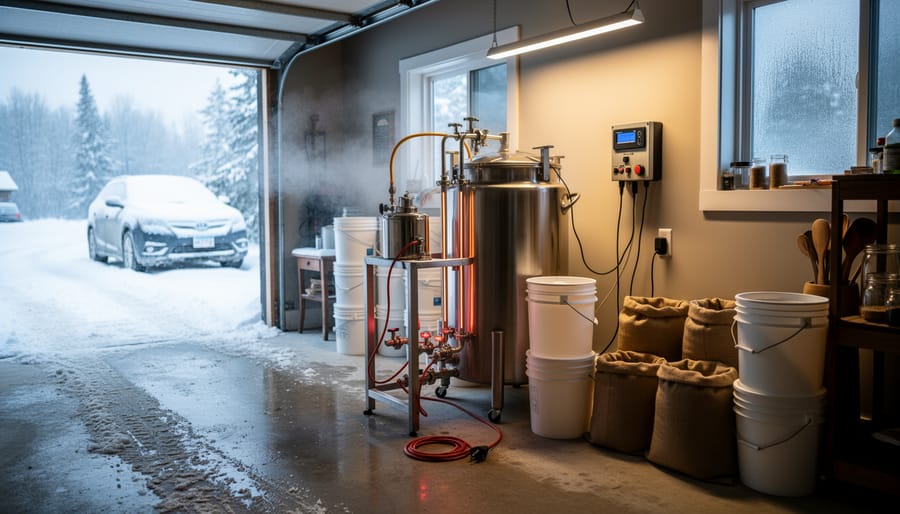
Think of an all-grain electric brewing system as a small appliance for your beer, not a recipe or a technique. It’s a physical rig: a kettle (sometimes two or three vessels) with built-in heating elements and a controller, plugged into household power. No flame, no gas lines.
To see where it fits, it helps to know the three ways people make beer at home. Extract brewers start with concentrated malt syrup or powder, so most of the hard work is already done. Partial-mash brewers steep some real grain and top up with extract. All-grain brewers do it all themselves, soaking crushed malted barley in hot water to pull out the sugars. If you want the fuller picture, our rundown of the all-grain basics covers it nicely.
Here are a few terms you’ll see throughout this article:
- Mash
- Soaking crushed grain in hot water at a steady temperature so its starches convert into fermentable sugars.
- Wort
- The sugary liquid you collect from the mash, which becomes beer once the yeast gets to work.
- Sparge
- Rinsing the grain with hot water to wash out any remaining sugars.
- BIAB
- Short for brew in a bag, a method where the grain sits in a large mesh bag or basket inside the kettle.
- PID controller
- The brain of the rig, which switches the heating element on and off to hold your target temperature.
So who tends to pick one up? Apartment and condo brewers, for starters. So do basement and garage tinkerers, and anyone who can’t or won’t burn propane indoors. If you like steady, repeatable heat and a warmer brew day in January, an electric rig is a friendly place to land.
How an Electric All-Grain System Works, Step by Step
Why Temperature Control Is the Quiet Hero
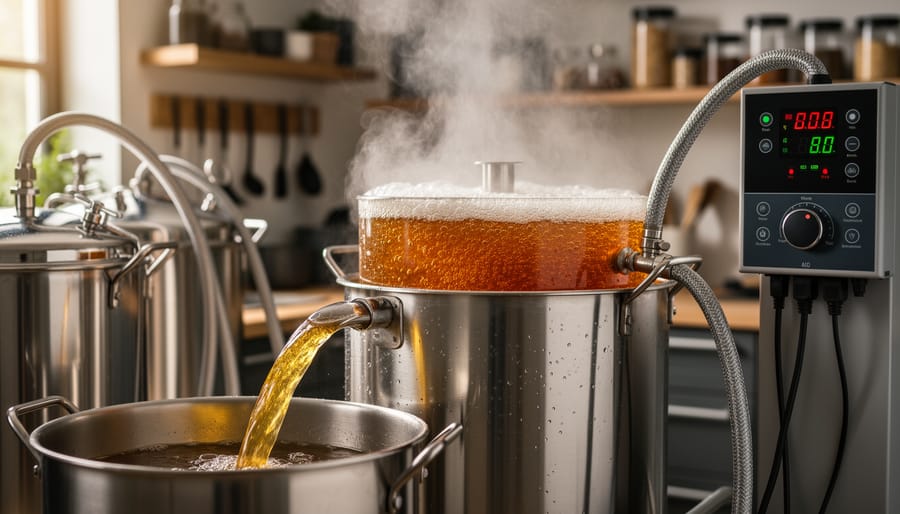
Mash temperature is the dial that decides what your beer feels like in the glass. Hold the mash around 148-150°F and you favour fermentable sugars, which gives a drier, crisper beer. Push it toward 156-158°F and you leave more unfermentable sugars behind, so the body comes out fuller and slightly sweeter. A few degrees either way can turn the same grain bill into a noticeably different beer.
This is where electric shines. A controller reads the temperature and cycles the element on and off, so the mash sits right where you set it for the whole hour. With a flame, you’re hovering over the kettle, nudging the burner, stirring, and hoping a cold garage draft doesn’t pull you off target.
Less babysitting also means more time to enjoy the process, and a brew day that feels calm instead of chaotic.
Types of Electric All-Grain Systems and Their Key Components
The Parts That Matter Most
If you’re shopping for your first rig, a handful of parts do most of the heavy lifting. Understanding them makes spec sheets a lot less intimidating, and helps you spot where a cheaper unit cuts corners.
- Heating element: Does the actual work of bringing water to a mash and a rolling boil; look for a low watt density design that won’t scorch your wort.
- Controller: The brain that holds your mash temperature steady and tames the boil, so you aren’t babysitting a dial.
- Pump: Moves wort through the system for recirculation, which keeps temperatures even and the grain bed clear.
- Filter or grain basket: Holds the grain and lets liquid flow through, so you can lift or drain instead of scooping out soggy malt.
- Chiller: Drops boiling wort to yeast-friendly temperatures quickly, which protects flavour and lowers infection risk.
- Ventilation: Gets steam out of your space, which matters a lot in a condo or a closed-up winter basement.
Of everything on that list, the controller and the element are where I’d spend first. A great pump can’t rescue a system that swings five degrees during the mash. Also, check that the unit’s power draw matches your home’s circuit before you buy, since heating a full kettle pulls serious current.
All-Grain Brewing Benefits: Why Brewers Make the Switch

Flavour, Freedom, and Cost: What You Really Gain
Once you’ve brewed all-grain on an electric rig, the payoff shows up in the glass and in the receipt. Here’s what you actually gain:
- Recipe control: You choose every grain, so a Canadian two-row base with a touch of crystal malt is yours to tweak by the ounce.
- Style range: Lagers, saisons and big stouts are all on the table, and porter brewing is a great place to play with roast and chocolate malts.
- Ingredient savings: A sack of base malt typically costs far less per batch than pre-made extract.
- Consistency: A controller holds your mash at 66°C, so batch two tastes like batch one.
- Brewing-skill growth: Adjusting mash temperature teaches you how body and dryness really work.
None of this makes extract brewing second-rate. All-grain is simply a rewarding step up, and electric control makes it far less fiddly.
How Brewers Put Electric All-Grain Rigs to Work
Electric rigs earn their keep because they fit into real lives. The biggest win is brewing indoors through the cold months, with no open flame and no propane tank freezing to the garage floor. A kettle that plugs into a dedicated outlet means a February brew day happens in the basement or laundry room, with a hot mug nearby.
Small spaces are another sweet spot. Apartment and condo brewers (check your building’s rules first) can run a compact all-in-one unit on a countertop or in a utility corner. Because the controller holds temperatures steady, the same recipe turns out the same way each time, which makes dialing in your own recipes far easier. Tweak one thing, like the mash temperature or a hop addition, and you’ll actually know what changed.
Small-batch experiments thrive here too. Try a one-gallon test of a maple-kissed porter before committing to a full batch. Plenty of brewers also turn brew day into a social event, with friends pitching in on the mash and the boil. Brew clubs and campus brewing groups lean on electric setups for similar reasons: they’re safer to run in shared indoor spaces and simple to teach.
The community side matters just as much. Brewers swap wiring tips, controller settings and kettle hacks, and a lot of that comes through in brewer insights shared by people who’ve done it. What’s your rig, and what’s the best story from your last brew day? Tell us in the community.
Common Questions About Going All-Grain with Electric
If you’re standing at the edge of the all-grain pool wondering what you’re getting into, you’re in good company. These are the questions that come up most often at brew club nights and in community threads, and none of them are silly.
Is electric brewing harder than propane?
Most brewers find it easier. You set a temperature and the controller holds it, so there’s no flame to babysit during the mash.
Can I brew indoors safely?
Electric heating means no open flame and no combustion fumes, which is a big reason brewers use these rigs through winter. You’ll still want good ventilation for steam and a spot with a proper GFCI-protected outlet.
Do I need a special outlet?
Smaller 120V systems can often run on a standard household circuit, while bigger 240V rigs need a dedicated one. Check your home’s electrical capacity and local code, and bring in a licensed electrician if you’re unsure.
Can I move from extract to all-grain gradually?
Absolutely. Try a partial mash first, swapping some of your extract for mashed grain, then work up to a full all-grain batch when you feel ready.
As for whether all-grain beer will taste noticeably better, that depends on the recipe and your process. It gives you far more control over the grain bill and mash profile, but a well-made extract beer still beats a rushed all-grain one every time. Start where you’re comfortable, and let the hobby pull you forward at its own pace.
An electric all-grain system takes everything good about brewing from real grain and makes it easier to live with. You get steady temperatures, repeatable results, and a setup that works just as well in a January garage as it does on a July afternoon. No propane, no flame, no shivering over a kettle.
Start wherever you are. Maybe that’s a first partial mash on the stove, or maybe you’re finally ready to retire the gas burner for a full rig. Either path is a good one, and both make better beer than waiting for the “perfect” moment.
If you’re nervous about brew day, these first batch tips are a friendly place to begin, and when you’re stuck on something specific, you can ask experts the questions that matter.
Then come share your setup, your results, and your happy accidents with the Canadian Brew community. Explore the membership resources and related articles, and let’s keep the kettles warm together.