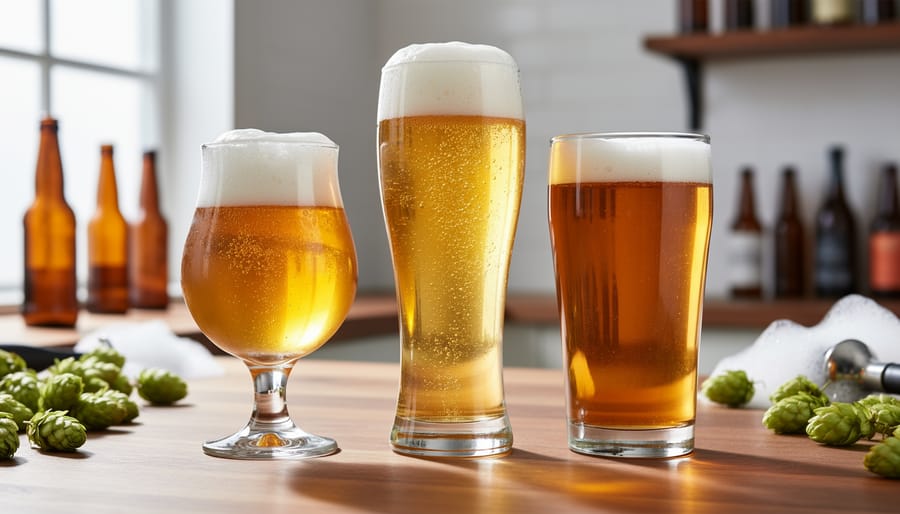
Standard beer glasses range from 12 to 20 ounces in capacity, with heights between 6 and 9 inches and rim diameters spanning 2.5 to 4 inches. But those numbers only tell part of the story. The real question isn’t just how big your glass is, it’s whether those dimensions are actually serving your beer the way it deserves to be served.
Most Canadian homebrewers spend months perfecting a recipe, dialing in fermentation temperatures, and waiting patiently for carbonation. Then they pour that carefully crafted IPA into whatever pint glass happens to be clean. The glass matters more than you’d think. A tulip’s tapered rim concentrates hop aromas that would dissipate in a straight-walled shaker pint. A weizen glass with its tall, narrow base showcases the haze and color of your wheat beer while supporting a thick head. The dimensions aren’t arbitrary design choices, they’re functional features that affect aroma delivery, head retention, and even carbonation perception.
Understanding beer glass dimensions helps you make smarter purchasing decisions, whether you’re stocking a home bar or planning glassware for a small brewery. Different beer styles have evolved alongside specific glass shapes for good reasons rooted in chemistry and sensory science. When you’re learning first batch basics glassware might seem like an afterthought. But once you’ve invested time and ingredients into brewing, choosing the right vessel becomes part of respecting your craft and maximizing what you taste in every pour.
Why Glass Dimensions Actually Matter (Beyond Looking Pretty)
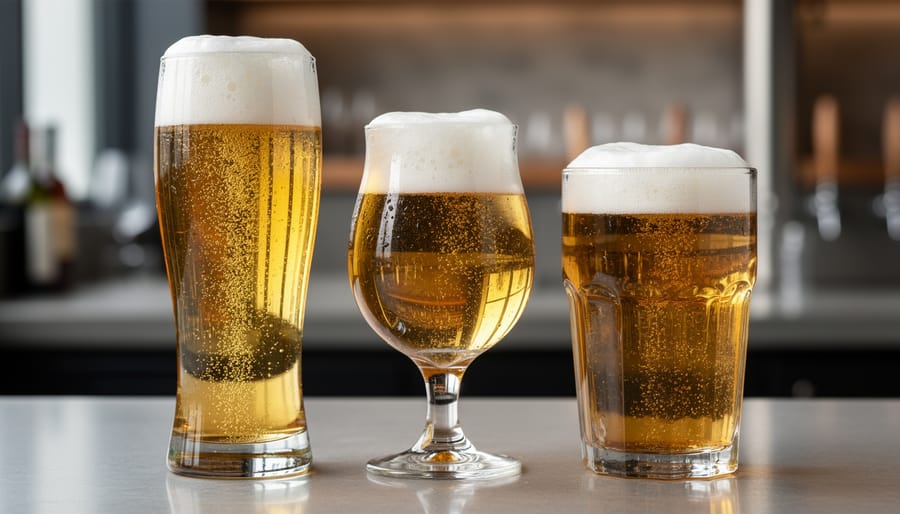
When you pour your latest IPA into a random tumbler versus a proper tulip glass, you’re not just missing out on Instagram appeal, you’re fundamentally changing how that beer hits your senses. The dimensions of your glass create a micro-environment that controls everything from how quickly aromatics escape to where the liquid lands on your tongue.
Start with height. A taller glass does more than show off your beer’s color and clarity. It extends the distance carbonation bubbles travel before breaking at the surface, which builds a denser, more persistent head. That tall narrow glass choice isn’t just tradition for pilsners, it’s physics working in your favor. A six-inch pilsner glass versus a three-inch tumbler means your bubbles have twice the journey to create visual drama and foam stability, both crucial when you’re showcasing a heavily carbonated homebrew at your club meeting.
Bowl width controls aroma concentration. A narrow opening traps volatile hop compounds near your nose, intensifying the tropical punch of your NEIPA before you even sip. A wide-mouthed glass lets those aromatics dissipate into the room within minutes, which is why brandy snifters work beautifully for imperial stouts but murder delicate saison esters. The science is straightforward: aroma molecules are heavier than air but not by much. A tapered rim creates a chimney effect that channels them straight to your olfactory receptors instead of venting them sideways.
Rim diameter shapes flavor perception in ways most homebrewers overlook. A wider rim spreads beer across your entire tongue simultaneously, emphasizing balance. A narrower rim directs liquid toward the tip and sides first, highlighting sweetness and acidity before bitterness registers at the back. This matters enormously for sessionable beers where subtle malt character can get buried, or for hop-forward styles where you want that bitterness to arrive last, not first.
Volume capacity ties directly to serving temperature and session management. A 5 oz taster glass keeps a 9% barleywine from warming past ideal temperature before you finish it. A 20 oz Imperial pint works perfectly for a 4.5% bitter you’ll nurse over conversation. Pour that same barleywine into a full pint and you’re racing the clock as it climbs from 55°F to room temperature, turning complex into cloying. Capacity isn’t arbitrary, it’s calibrated to ABV, drinking pace, and the thermal mass of the liquid itself.
Standard Beer Glass Dimensions by Style
Pint Glasses: The Canadian Standard
In Canadian bars and brewpubs, the 20 oz Imperial pint reigns as the standard serving size, a full 125 ml larger than the 16 oz American pint you’ll encounter south of the border. This isn’t just about getting more beer; those extra four ounces change the drinking experience, particularly for sessionable ales and lagers where temperature matters over a longer consumption window.
The shaker pint (also called an American pint glass) measures roughly 15 cm tall with a 9 cm rim diameter, tapering to an 6 cm base. It’s the workhorse glass in most establishments, cheap, stackable, dishwasher-safe, but its straight-sided design does your homebrew no favors. Aroma escapes quickly through that wide rim, and there’s minimal head retention on the uniform surface.
The nonic pint addresses some of these shortcomings with its distinctive bulge near the rim (about 2 cm below the top). Standing around 15 cm tall with similar base dimensions to the shaker, that bump serves multiple purposes: it provides grip, prevents stacking damage to the rim, and creates a slight nucleation point that helps maintain head. For English-style bitters, brown ales, and Irish stouts, styles where moderate carbonation and malt-forward character define the experience, the nonic’s proportions work beautifully. The bulge also keeps your hand away from the beer itself, slowing temperature rise during those longer Canadian patio sessions.
Specialty Glasses for Craft Styles
Craft beer styles demand more than a standard pint. The dimensional profiles of specialty glasses evolved to amplify the specific characteristics homebrewers work hard to create.
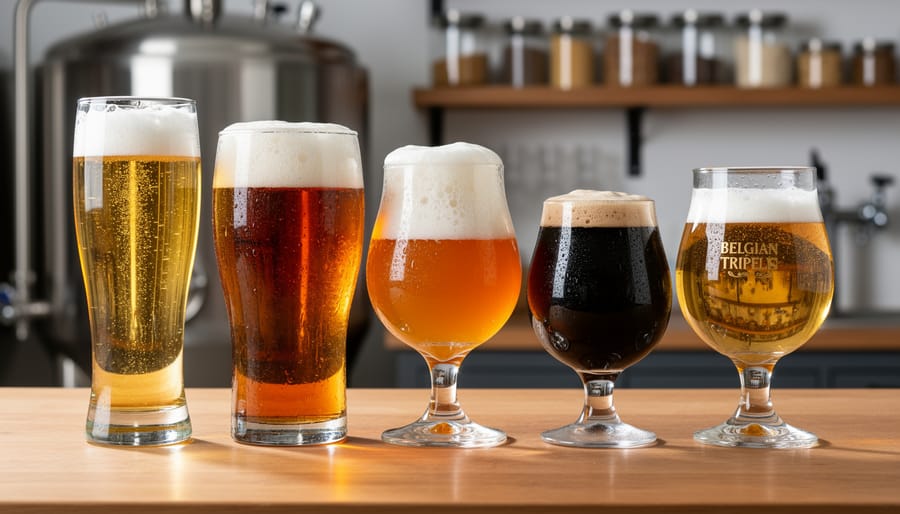
Tulip glasses stand 6-7 inches tall with a bulbous bowl (3-3.5 inches diameter) that tapers to a flared rim (2.5-3 inches). This 12-16 oz capacity suits hoppy IPAs and saisons perfectly, the wide bowl releases volatile hop aromatics while the tapered rim concentrates them at your nose. The stem keeps your hand’s warmth away from the beer, crucial for styles best served at 45-50°F.
Snifters mimic brandy glasses for good reason. At 8-12 oz with a 3-4 inch wide bowl tapering to a narrow 2-inch rim, they trap the complex esters and alcohol warmth of imperial stouts and barleywines. The short stem and broad base let you cup the bowl, gently warming higher-ABV beers to release layered flavors, roasted malt, dark fruit, bourbon notes from barrel aging.
Weizen glasses are tall (9-10 inches) and narrow at the base (2 inches) but flare dramatically at the top (3 inches), holding 16-24 oz. This height showcases the thick, pillowy head wheat beers throw, while the flared top prevents foam overflow, a real concern when pouring hefewizens with their vigorous carbonation.
Stemmed goblets for Belgian ales feature a wide bowl (3.5-4 inches), thick stem, and 10-16 oz capacity. The broad surface area releases phenolic and fruity yeast character while the heavy base maintains stability despite the top-heavy design.
Taster and Flight Glasses
Taster and flight glasses typically hold 3 to 5 ounces, perfect for sampling multiple homebrews without overwhelming your palate or your sobriety. These miniature vessels usually stand 4 to 5 inches tall with a rim diameter of 2 to 2.5 inches, deliberately scaled down to preserve the proportions of their full-size counterparts. A 4-ounce tulip taster, for instance, maintains the same inward-tapering bowl and flared rim as a standard 13-ounce tulip, just shrunk to tasting size.
This proportional scaling matters because it means your hoppy IPA still concentrates aroma at the rim, and your imperial stout still develops a proper head, both crucial when you’re presenting beers at homebrew club meetings or competitions where judges evaluate appearance and aroma alongside flavor. Most Canadian homebrew clubs stock 3 to 4-ounce samplers for flight tastings, letting members compare five or six beers side-by-side without fatigue. Look for tasters with consistent wall thickness and sturdy bases; flimsy plastic cups might save money, but they can’t replicate the temperature control and visual clarity that proper glass dimensions provide.
How to Match Glass Dimensions to Your Homebrew

Start by considering your beer’s carbonation level when choosing glass height. A heavily carbonated saison or Belgian tripel needs a taller glass, at least 18-20 cm, to showcase that persistent foam crown and let the bubbles rise dramatically. Lower-carbonation styles like English bitters or milk stouts work fine in shorter 14-16 cm glasses where head retention isn’t the star of the show. If you’re pouring a beer with aggressive carbonation into a short glass, you’re fighting physics and wasting half your pour on overflow.
Bowl width directly affects how your hop-forward beers present themselves. Wide-bowled glasses (8-10 cm diameter) let volatile hop aromatics escape too quickly, which is disastrous for your dry-hopped IPA or aromatic pale ale. Instead, reach for a narrower tulip or thistle glass (5-7 cm at the widest point) that concentrates those citrus and pine notes right under your nose. For malt-focused styles like doppelbocks or barleywines, a slightly wider bowl works because you want some aeration to open up the complex caramel and dark fruit character.
Capacity matters more than most homebrewers realize. High-ABV beers, anything over 7 percent, belong in smaller glasses (250-350 ml) because nobody wants a warm, boozy mess by the time they reach the bottom. Session beers and lagers can handle full pint volumes (470-568 ml) since they’re meant to be consumed at a steady pace while staying cold. When you’re serving your own beer at a homebrew club meeting, pour into appropriate volumes that let people finish while the beer’s still at its best temperature.
Rim diameter influences mouthfeel perception. A flared rim (7-9 cm) spreads beer across your entire palate, which works beautifully for balanced styles like amber ales or pilsners. A straight or slightly tapered rim (5-6 cm) delivers beer to the center of your tongue first, emphasizing sweetness and body, perfect for stouts and porters where you want that creamy texture front and center.
For competition prep and club tastings, match your glassware to BJCP style guidelines expectations. Judges form impressions quickly, and pouring a delicate kölsch into a heavy goblet or a robust porter into a skinny pilsner glass sends the wrong visual message before they even taste. Study what experts learn about presentation, it’s not superficial when proper glassware helps you deliver better tasting notes to your audience. Keep a few competition-appropriate glasses in your kit: a standard tulip covers most ales, a pilsner glass handles lagers, and a snifter works for anything big and boozy.
The Canadian Context: Imperial vs. Metric Dimensions
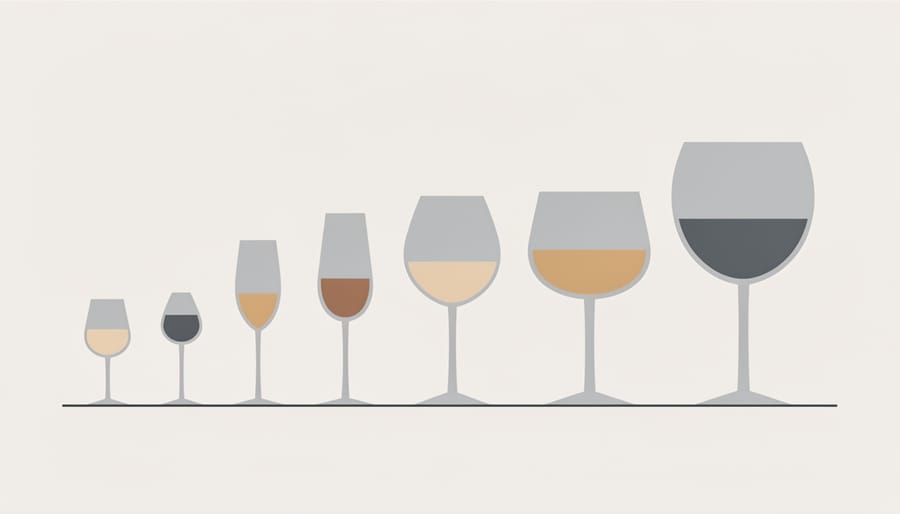
Canadian homebrewers live in a dual-measurement world. Your recipe software might calculate in liters, but the shaker pint you just bought from a US supplier lists 16 ounces. European glassware retailers quote centimeters and milliliters, while your local homebrew shop sells glasses marked in ounces. This measurement split isn’t just confusing, it affects how you evaluate whether a glass actually fits your beer.
The core conversions are straightforward: one fluid ounce equals roughly 30 ml, so a 12 oz glass holds about 355 ml. For height and diameter, one inch equals 2.54 cm. But context matters more than math. When a Canadian brewpub serves a “pint,” they typically mean the 20 oz Imperial pint (568 ml), not the 16 oz American version (473 ml). If you’re aiming to replicate that taproom experience at home, you need glasses sized for Imperial pours.
Shopping online adds another layer. US retailers default to ounces and inches, European suppliers to milliliters and centimeters. A “tall pilsner glass” from Germany might be listed as 400 ml and 23 cm high, while an identical-looking American version reads 13.5 oz and 9 inches. They’re close but not identical, 400 ml is actually 13.5 oz, and 23 cm is just over 9 inches. Check both capacity and physical dimensions when comparing across regions.
Most Canadian homebrewers find it easier to think in milliliters for recipe volumes and serving sizes (a standard bottle is 341 ml, a tallboy 473 ml), then convert to ounces only when necessary. Keep a quick reference handy: 355 ml equals 12 oz, 473 ml equals 16 oz, 568 ml equals 20 oz. Once you internalize those benchmarks, navigating glassware specs becomes second nature.
Where Dimensions Go Wrong: Common Glass Mistakes
You’ve brewed a beautiful hazy IPA, poured it into that oversized 24 oz mug from the back of the cupboard, and wondered why the tropical hop aroma disappeared halfway through. The culprit? Glass dimensions working against your beer rather than with it.
Too-large glasses create real problems beyond wasteful air space. When you pour 12 oz into a 20 oz glass, that extra volume accelerates warming, the beer spreads thin against more glass surface, and your hand’s heat transfers faster. I’ve watched homebrewers serve barrel-aged stouts in pint glasses at club meetings, then complain the beer tasted boozy and hot by the bottom. A 6-8 oz snifter would’ve kept those complex flavors balanced.
Wide, flared rims scatter aroma molecules before they reach your nose. This kills delicate hop profiles in IPAs and subtle esters in Belgian ales. If your carefully dry-hopped pale ale smells muted in the glass but explosive when you sniff the fermenter, blame rim diameter. Narrow or tulip-shaped rims concentrate volatiles; straight-sided shaker pints let them escape.
Short glasses sabotage carbonation and head. A 5 oz stubby tumbler can’t develop the foam column that protects flavor and showcases your carbonation work. You’ll get a thin cap that vanishes instantly. Height matters, wheats and Belgians especially need vertical space to build that signature fluffy head.
Mismatched proportions confuse perception. Serving a delicate pilsner in a heavy goblet makes it taste clumsy. Pouring a rich porter into a narrow pilsner glass emphasizes bitterness over malt sweetness because the beer hits your tongue differently. The wrong dimensional profile literally changes what you taste, regardless of recipe quality.
Building Your Homebrew Glass Collection
Start with function, not fashion. The right glass collection for your homebrew setup depends on what you actually brew, not what looks impressive on a shelf. If you’re pouring mostly hoppy ales, a tulip glass (13-16 oz capacity, 6-7 inch height, 2.5-3 inch rim diameter) becomes your workhorse. Brew lagers and session beers? A standard pint glass handles the job. The goal is covering your typical rotation with glasses whose dimensions genuinely enhance those beers.
For a strategic build, acquire glassware in this sequence:
- Start with a tulip or IPA glass (13-16 oz) for hoppy beers and saisons where aroma concentration matters.
- Add a standard pint glass (16 or 20 oz Imperial) for straightforward ales and lagers that don’t need specialized dimensions.
- Include a snifter (8-12 oz, 5-6 inch height) for imperial stouts, barleywines, and any high-ABV brews.
- Expand with a weizen glass (18-24 oz, tall and tapered) if you brew wheat beers or hefeweizens regularly.
- Add 4-5 oz taster glasses for sampling multiple batches or homebrew club meetings.
This progression covers 80% of homebrew styles without requiring a dedicated glass for every niche category.
In Canada, restaurant supply stores often stock durable glassware at reasonable prices with clear dimensional specs. Libbey and Anchor Hocking offer consistent measurements across production runs. Online retailers like and specialty beer sites ship full sets, but verify dimensions in the product description rather than relying on style names alone. A “tulip” from one manufacturer might measure 14 oz while another’s hits 18 oz, changing how your beer presents and performs. Understanding these dimensional differences will improve your brew presentation as much as recipe refinement improves flavor.
Buy duplicates of your core glasses so you can serve side-by-side comparisons or host small tastings without mismatched dimensions skewing perception.
What’s the ideal glass size for tasting homebrew samples?
Stick to 3-5 oz taster glasses, roughly 10-12 cm tall with a 5-6 cm rim diameter. This size lets you evaluate aroma, appearance, and flavor without committing to a full pour, and it’s the standard at most Canadian homebrew club meetings where you’ll taste multiple beers in one session.
Do glass dimensions really affect flavor perception?
Absolutely. A wider bowl (8-10 cm diameter) releases more volatile hop aromatics, making your IPA smell bolder, while a narrow rim (4-5 cm) concentrates aromas toward your nose and directs beer to specific parts of your tongue. The difference isn’t subtle when you compare the same beer in different dimensional profiles side by side.
How do I measure my existing glasses?
Use a ruler or tape measure to check height from base to rim, diameter at the widest point of the bowl, and rim diameter across the top opening. For capacity, fill the glass with water and pour into a measuring cup, most Canadian homebrewers find their “pint” glasses hold anywhere from 16 to 20 oz depending on where they were purchased.
Can I use the same glass for multiple beer styles?
A tulip glass (15-18 cm tall, 7-8 cm bowl diameter, 5 cm rim) works surprisingly well across IPAs, saisons, Belgian ales, and even some stouts. It won’t be perfect for every style, but it’s versatile enough for most homebrews if you’re keeping your collection minimal.
What dimensions work best for barrel-aged or sour beers?
Go for a snifter or small tulip around 12-15 cm tall with a 6-8 cm bowl diameter and 4-5 cm rim. The smaller capacity (8-12 oz) suits higher-ABV barrel-aged beers that warm quickly, while the tapered rim traps the complex funkiness of sours and concentrates those layered aromas you worked hard to develop.
Why are some craft beer glasses so oddly shaped?
Those unusual dimensions, exaggerated curves, ultra-narrow stems, bulbous middles, are engineered for specific sensory effects. A Belgian goblet’s wide bowl and thick stem keep strong ales cooler longer, while a thistle glass’s pinched waist and flared rim showcase Scottish ale’s malt complexity. What looks quirky is usually functional once you understand the beer style it’s designed to serve.
These questions come up constantly in Canadian homebrew forums and club tastings, especially when brewers start thinking seriously about presentation for competitions. The dimensional sweet spot depends heavily on your brewing focus. If you’re deep into hop-forward styles, invest in glasses with wider bowls that let those aromatics shine. If you’re exploring mixed fermentation or barrel projects, smaller-format snifters become essential.
One practical tip: when you’re measuring glasses or shopping for new ones, bring a small ruler and your phone’s calculator to convert between Imperial and metric on the spot. Canadian retailers mix measurement systems freely, and a glass listed as “16 oz” might have completely different height and diameter proportions than another 16 oz glass depending on the manufacturer. The volume matters, but the shape determines how your homebrew actually presents itself.
Don’t overthink it at first. Start with one good tulip, one proper pint, and a set of tasters. Pour the same homebrew into each and notice what changes. That hands-on comparison teaches you more about dimensional impact than any chart ever will, and it’s exactly how most experienced Canadian homebrewers developed their glassware instincts over time.
Understanding beer glass dimensions isn’t just about owning the right glassware, it’s about respecting the craft you’ve invested hours brewing. Every measurement, from rim diameter to bowl height, serves a purpose in delivering your beer’s aroma, flavour, and visual appeal exactly as you intended. Whether you’re pouring your first extract kit lager or a complex barrel-aged sour, the glass you choose shapes how that beer tells its story.
Start experimenting with different dimensional profiles for your favourite homebrew styles. Pour the same IPA into a standard pint and a tulip glass, then notice how the narrower rim concentrates those hop aromatics. Try your stout in a snifter versus a nonic pint and feel how the bowl shape changes your perception of roast and sweetness. These small discoveries make you a better brewer because you understand the full experience you’re creating.
The Canadian homebrew community thrives on sharing knowledge and celebrating each other’s creations. Bringing thoughtfully chosen glassware to club meetings or competitions shows you care about presentation as much as recipe formulation. Your brewing artistry deserves a proper canvas, and sometimes that canvas is measured in centimetres and millilitres. Cheers to pouring smarter, one perfectly dimensioned glass at a time.