Kisspeptin is a naturally occurring signalling peptide that researchers study for its role in reproductive neuroendocrinology, and in Canada it is sold strictly for laboratory research use, not for people or pets. If you’re sourcing it, the short version is simple: verify purity with a third-party certificate of analysis, keep it cold and dry, and never buy from anyone making health claims. You can see what a typical supplier page looks like on this listing.
Think of it like moving from extract kits to all-grain brewing. You gain control, but you also take on responsibility for every input. A peptide is much the same. Its quality depends on the batch, the handling, and the paperwork behind it, and a nice label tells you nothing. Skip any of those checks and you’ve spoiled the wort before it ever reaches the fermenter.
This FAQ walks through what kisspeptin is, where Canadian regulations draw the line, how to read purity data, how to store vials, and what the published evidence does and doesn’t support. Questions are answered plainly, with a vetting checklist and red flags at the end.
What Kisspeptin Actually Is (In Plain Language)
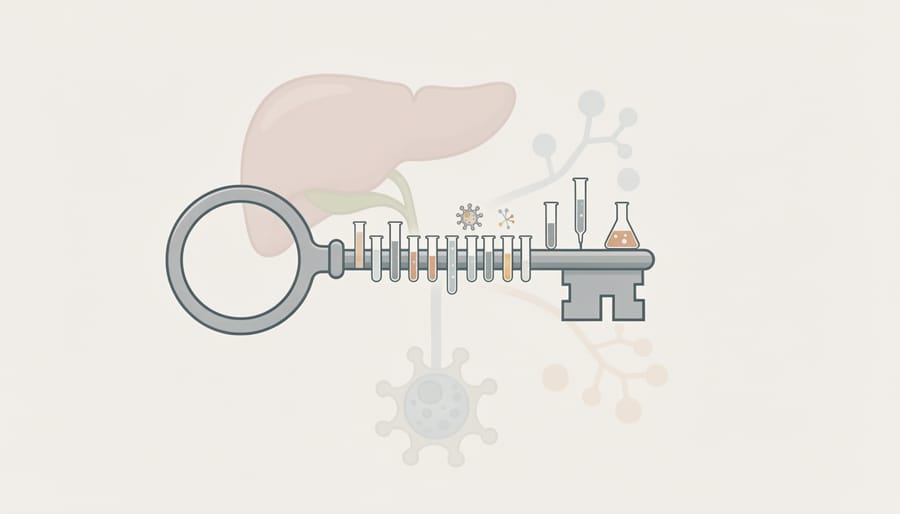
If you’ve ever tuned a temperature controller on a fermentation fridge, you already understand the basic idea behind kisspeptin. The controller doesn’t make the beer. It just tells the system when to start heating or cooling so everything else can do its job. Kisspeptin plays a similar signalling role in the body.
In plain terms, it’s a naturally occurring neuropeptide, a small protein-like messenger made by nerve cells. Researchers describe Kisspeptin encoded by KISS1 as a key upstream signal in the reproductive hormone axis. It sits near the top of a chain of messages and helps prompt the release of other hormones further down the line. That “master switch” position is exactly why it keeps showing up in academic and preclinical studies. If you want to understand how the reproductive system gets switched on, regulated and fine-tuned, kisspeptin is a natural place to start.
Here’s a quick glossary so the terminology doesn’t trip you up later:
- Kisspeptin
- A neuropeptide that acts as a signalling molecule in the reproductive hormone axis, studied widely in laboratory and preclinical research.
- KISS1
- The gene that carries the instructions for making kisspeptin.
- GnRH
- Gonadotropin-releasing hormone, a downstream signal that kisspeptin is understood to influence in the hormone cascade.
- Neuropeptide
- A short chain of amino acids that nerve cells use to communicate with each other and with other tissues.
- Peptide fragment (e.g., kisspeptin-10)
- A shorter piece of the larger peptide, often used in research because it retains key activity in a smaller, more manageable form.
- Research-use-only
- A label meaning the material is intended for laboratory study, not for human or veterinary consumption.
Keep that last term in mind. Everything we cover here is about understanding the science and sourcing responsibly, not about using any of it outside a properly regulated research setting.
The Questions Research Buyers Ask Most
Is Kisspeptin Legal to Buy in Canada?
Short answer: it depends, and that’s an answer worth taking seriously. Research peptides like kisspeptin are generally sold for in-vitro or laboratory research only, and the label usually says so plainly: not for human consumption. That wording matters, because in Canada the regulatory picture hinges on intended use and how a product is classified. The same compound can be treated very differently depending on whether it’s headed for a lab bench or for someone’s body.
Think of it like the gap between food-grade and lab-grade chemicals in the brewing world. A reagent that’s fine for a titration isn’t something you’d toss in the kettle, and the paperwork reflects that. Peptides work the same way, so the classification and the stated purpose both count.
We’re not lawyers, and this isn’t legal advice. Rules and enforcement priorities shift, so what applied last year may not apply today. The smart move is to read the Health Canada research-only peptides guidance directly rather than leaning on a supplier’s say-so or a forum thread.
If you’re buying through a university, college or company, check your institution’s procurement and ethics policies too. Your research office can usually tell you what’s allowed, who has to sign off, and what records to keep before an order goes in.
Which Form Should I Look For? Fragments, Purity and Formats
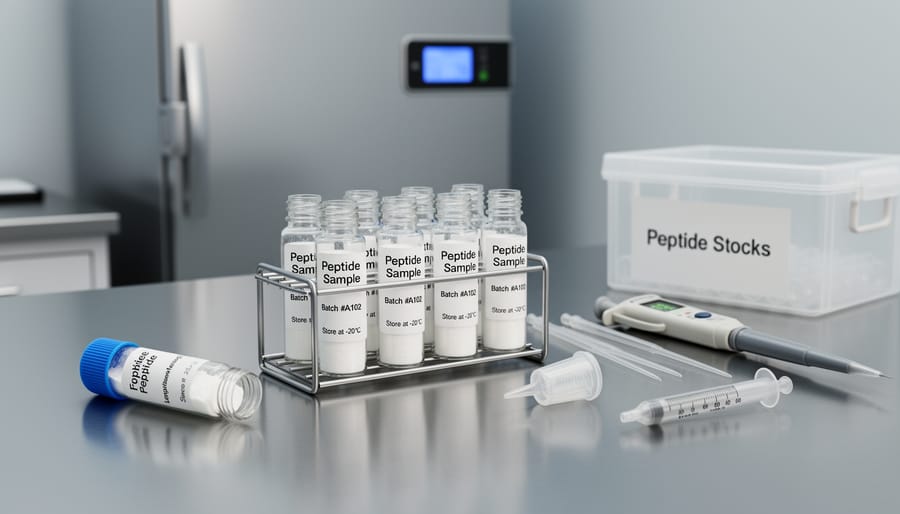
Kisspeptin isn’t one single product on the shelf. Researchers work with different fragments, and the best-known family is the kisspeptin-54 peptide and its shorter pieces, kisspeptin-14, -13 and -10. They share a core sequence, but the length changes how a peptide behaves in a study, so the label matters.
Think of whole-cone versus pellet hops. Same plant, different handling, and very different shelf behaviour. Peptides work the same way. Freeze-dried (lyophilized) powder is the stable, cold-and-dry option, while a ready-made solution is more convenient but far more fragile.
| Format or fragment | Typical research context | Key buyer consideration |
|---|---|---|
| Kisspeptin-54, lyophilized | Full-length peptide studies | Confirm the full sequence and lot number on the label |
| Kisspeptin-10, lyophilized | Shorter fragment, common in receptor work | Check the fragment name matches the sequence on the COA |
| Pre-made solution | Short-term bench work | Shorter shelf life, so check storage guidance |
Purity percentages deserve a careful read. A figure like 98% usually comes from HPLC analysis and tells you how much of the sample is the target peptide versus related impurities. It’s only meaningful when a certificate of analysis backs it up, ideally alongside mass spectrometry confirming the identity.
So look for the exact peptide sequence, a lot number, and matching documentation. If the vial and the paperwork don’t tell the same story, walk away.
How Do I Tell a Reputable Supplier from a Sketchy One?
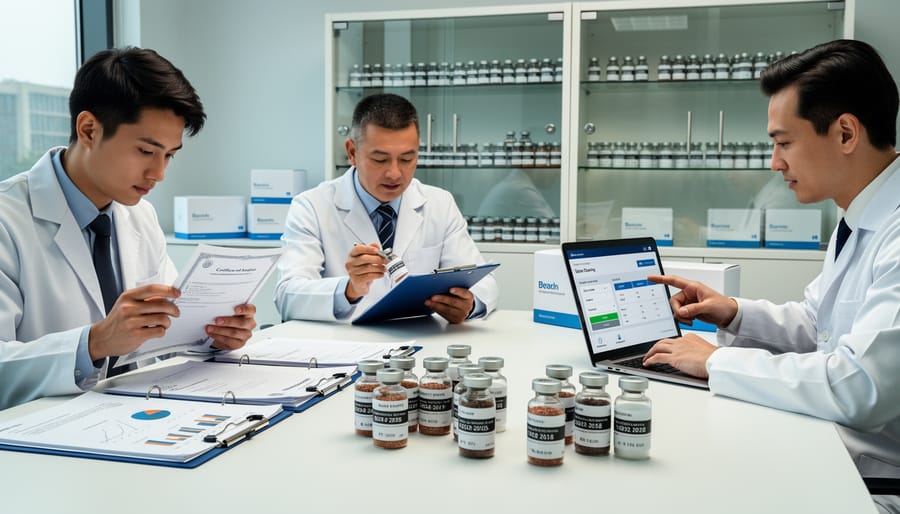
Think of vetting a peptide supplier the way you’d size up a new ingredient shop. You wouldn’t trust a bag of unlabelled yeast with no batch date, and you shouldn’t trust a vial with no paper trail behind it. Here’s what to look for.
Start with a third-party certificate of analysis (COA). “Third-party” matters because a lab with no stake in the sale produced it. A good COA names the exact peptide, includes a batch or lot number, and shows HPLC data for purity plus mass spectrometry to confirm the molecular identity. If the number on the COA doesn’t match the lot on your vial, that’s a problem.
Next, check batch traceability and labelling. You should be able to tie your vial back to a specific production run, with the peptide name, sequence or fragment, quantity, and clear research-use-only language on the label. A supplier that dodges that wording, or hints at personal use, is waving a flag.
Pay attention to customer service, too. Reputable sellers answer questions about documentation without getting cagey. Be wary of anything promising dramatic results, since realistic claims are a sign of honesty. If you want a template for sizing up a seller properly, this kind of detailed buying guide shows how to compare specs and track record before spending a dime.
Finally, lean on your community. Ask lab colleagues, supervisors and peers who they’ve ordered from, just as homebrewers swap tips on trusted ingredient shops. A supplier that holds up to a few honest references is usually worth your trust.
How Should Kisspeptin Be Stored and Handled?
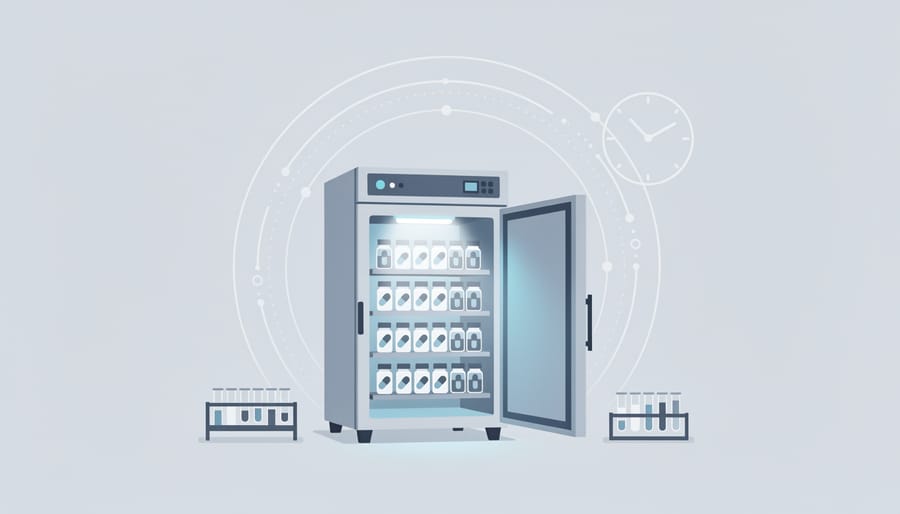
Storage is where a lot of good peptide gets quietly ruined. Lyophilized (freeze-dried) kisspeptin is generally kept cold, dry and out of the light. Once it’s reconstituted, it becomes far more fragile, so treat it with the same fussiness you’d give a yeast starter.
Brewers already know this mindset. You sanitize everything, and you don’t leave live yeast on a warm counter. If you want a refresher on that discipline, our bottling guide shows how much small handling choices matter. The same goes for cold storage where steady temperatures protect delicate contents.
A few reminders worth taping above the bench:
- Keep vials at the temperature stated in the supplier’s documentation.
- Shield them from light and moisture.
- Label every vial with the date, lot number and contents.
- Avoid repeated freeze-thaw cycles, which can degrade the peptide.
Above all, follow the supplier’s paperwork and your own lab’s protocols. When they disagree with general advice like this, they win.
What Does the Research Actually Say, and What Doesn’t It Say?
Published work on kisspeptin mostly looks at how it signals within the reproductive hormone axis, particularly its role in prompting the release of gonadotropin-releasing hormone. Much of that evidence comes from animal models and cell-based experiments, with a smaller body of early human studies, usually short-term and involving limited numbers of participants.
That context matters. A result in rodents or in a dish doesn’t automatically carry over to people, and small studies can’t settle big questions on their own. Think of it like a pilot batch on a three-gallon system: promising and worth learning from, but not proof it’ll scale.
So treat any bold marketing claim about a peptide with a healthy dose of skepticism. If a supplier promises dramatic outcomes, ask which study they’re pointing to, and whether it actually supports the claim. The best habit is to go to the primary literature yourself. Search peer-reviewed databases like PubMed, read the methods and limitations, and use your university or college library access to dig into the full papers.
Red Flags and Common Buyer Mistakes
Every brewer has a story about a bad batch, usually one that started with a shortcut nobody questioned. Buying research peptides works the same way, so let’s look out for each other the way we do over a shared carboy.
Start with the claims. If a seller promises health benefits, performance gains or anything that sounds like personal use, walk away. A legitimate research supplier sells for laboratory work only and says so plainly. Mixing up research-use products with anything meant for people is the biggest mistake buyers make, and it’s also where the legal and safety trouble begins.
Next, check the paperwork. No certificate of analysis, no batch number, no HPLC or mass spec data? That’s like a brewery that won’t tell you what’s in the keg. And watch the price. Rock-bottom pricing usually means corners were cut on purity or handling, and you can’t taste-test your way out of that.
Here’s a quick way to sort the good from the bad:
Pros
- Green flag: a third-party certificate of analysis tied to a specific batch.
- Green flag: clear research-use-only labelling with no personal-use claims.
- Green flag: transparent sourcing and responsive, knowledgeable customer service.
- Green flag: prices that sit in a realistic range for the stated purity.
Cons
- Red flag: promises of health, performance or “results” for the person taking it.
- Red flag: missing, vague or recycled lab documentation.
- Red flag: suspiciously cheap pricing with no explanation.
- Red flag: vague origins and no way to trace a lot.
If you’re newer to the lab side of things, it pays to get an education first, and you’ll spot these warning signs much faster. Ask your institutional colleagues, compare notes, and never feel silly for double-checking a supplier before you order.
Quick-Fire FAQ for Research Buyers
Does shipping to Canada get complicated?
It can. Temperature-sensitive peptides need proper packaging, and cross-border parcels may face customs review or delays. Ask your supplier how they ship, whether they use cold packs, and what paperwork travels with the parcel. Cold-chain care matters here the same way it does for a shipment of fresh yeast. Check the current import rules for your institution rather than assuming.
What documentation should I keep for lab records?
Hold on to the certificate of analysis, the batch or lot number, the invoice, the supplier’s product sheet, and a note of the date received and storage conditions. Think of it like a brew log: if something behaves unexpectedly later, those details let you trace what happened.
How long does a COA stay relevant?
A COA describes one specific batch at the time it was tested. It doesn’t guarantee quality after months of poor storage, and it says nothing about a different lot. If a batch has sat for a long time or you’re unsure how it was handled, ask the supplier about retesting or stability data.
Where can I find peer-reviewed literature?
Start with your university or college library, which usually gives access to databases like PubMed, Web of Science and publisher journals. Search for kisspeptin alongside terms like KISS1, GPR54 or the specific fragment you’re studying. Primary papers beat blog summaries and marketing pages every time, so read the methods section before trusting a headline finding.
Can I use my notes as proof a product is safe or effective?
No. Records show what you bought and how you handled it, not whether any outcome is established. Keep your work firmly within approved research protocols.
Got a question that didn’t make the list, or a sourcing lesson learned the hard way? Share it with the Canadian Brew community. Someone else is probably wondering the same thing.
So, here’s the short version of everything we’ve covered. Know what kisspeptin is and why researchers study it. Check your supplier the way you’d check a new maltster: ask for the certificate of analysis, the batch details, and plain labelling that says research use only. Handle the material with the same care you’d give a delicate yeast culture, cold, clean and documented. Stay inside Canadian rules and your institution’s policies, and when you’re unsure, ask the official source rather than guessing. Finally, keep your expectations tied to the evidence, which is promising in places but still largely preclinical.
Good sourcing and good science both start with curiosity and a healthy dose of skepticism. They get better when people share what they’ve learned. If you’ve got a question we missed, or a supplier-vetting tip that saved you a headache, bring it to the community. Pull up a chair, swap notes, and let’s keep learning together.