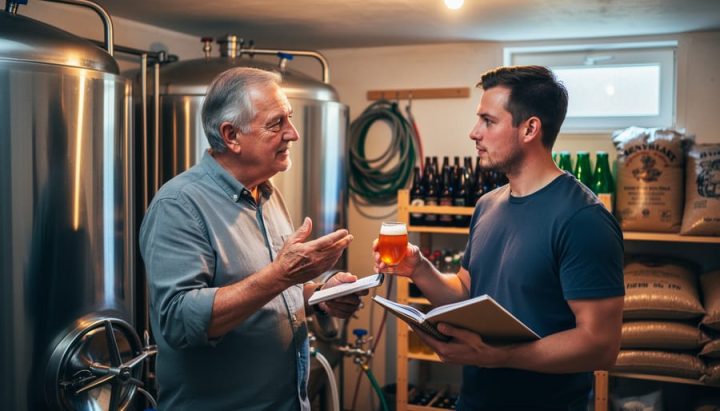
Preparing for a brewery interview means understanding both the technical fundamentals of professional brewing and the business acumen that separates hobby craft from commercial production. Whether you’re a homebrewer ready to turn your passion into a career, looking to conduct informative interviews with industry experts, or simply curious about what breweries prioritize when hiring, the questions asked in these conversations reveal the core competencies that define professional brewing in 2026.
The gap between your garage setup and a commercial brewery isn’t just about scale. Interviewers probe for consistency, safety protocols, recipe scalability, quality control systems, and the ability to troubleshoot under pressure when a 30-barrel batch is on the line. They want to know if you understand everything from CIP (clean-in-place) systems and glycol management to yeast propagation schedules and the regulatory landscape governing alcohol production in Canada. These aren’t just theoretical questions. They’re designed to assess whether you can maintain brand standards batch after batch, week after week.
For homebrewers exploring this transition, many of the first batch lessons you learned still apply, but the stakes and expectations multiply. This guide breaks down the most common brewery interview questions across categories like brewing knowledge, operations, safety, and culture fit, explains what interviewers are really evaluating with each question, and provides strategic approaches to demonstrate your readiness for professional brewing environments. You’ll also discover how to leverage your homebrewing experience as a genuine asset rather than a limitation.
Why Homebrewers Should Learn Brewery Interview Questions

Understanding brewery interview questions offers homebrewers far more than career preparation, it provides a window into the professional standards and systematic thinking that separate commercial operations from weekend brewing. When you learn from a brewers interview you’re accessing the same frameworks that guide production at craft breweries across Canada.
These questions reveal how professionals approach problems you’ve likely encountered in your own brewing: inconsistent fermentation temperatures, unexpected flavor profiles, or scaling recipes. The difference lies in the methodology. Commercial brewers must articulate their troubleshooting process, quantify their decisions, and demonstrate repeatability at scale. That discipline translates directly back to your homebrewing practice.
Consider water chemistry. Most homebrewers adjust their water profiles, but brewery interview questions probe deeper, asking about alkalinity targets for specific styles, mineral ratios for mash pH optimization, and how adjustments change from batch to batch. This level of precision might seem excessive for five-gallon batches, but understanding it helps you grasp why your stout tastes better with certain water profiles while your pilsner demands different treatment.
The Canadian craft brewing industry has become increasingly competitive, with hundreds of breweries fighting for shelf space and tap handles. Professional brewers need to balance creativity with consistency, innovation with cost control, and passion with pragmatism. Studying interview questions exposes these tensions, helping you appreciate the business realities behind your favorite local brewery’s decisions.
Even if you never pursue brewing professionally, this knowledge enriches your hobby. You’ll brew with greater intentionality, troubleshoot more effectively, and engage with brewery staff from a place of deeper understanding. That’s valuable whether you’re perfecting your recipes or simply enjoying the craft.
Essential Technical Brewing Questions
Water Chemistry and Recipe Formulation
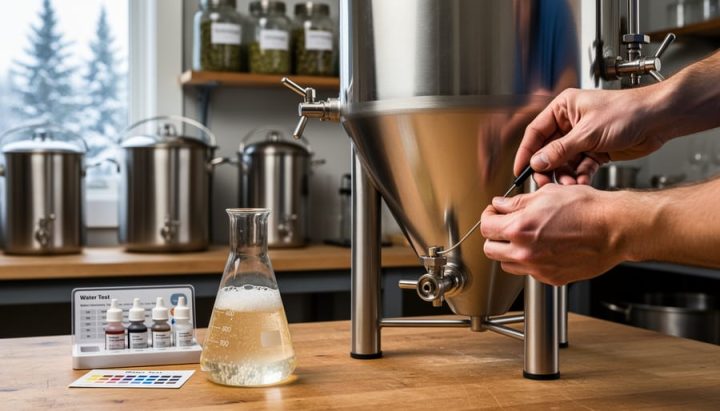
Brewery interviewers often start with deceptively simple questions like “Walk me through how you’d build a water profile for a New England IPA.” They’re testing whether you understand that water chemistry isn’t just about hitting numbers, it’s about how minerals interact with mash pH, hop utilization, and final beer character.
Expect questions that probe your practical experience: “You’re brewing a German Pilsner in Calgary where the tap water is extremely hard. What’s your approach?” Strong candidates explain their thought process, not just recite formulas. They might discuss starting with reverse osmosis water, adding back specific minerals, targeting a mash pH of 5.2-5.4, and keeping sulfate low to let delicate hop character shine.
Recipe scaling questions reveal whether you grasp commercial realities. “Your 20-liter homebrew IPA uses 400 grams of Citra hops. How do you scale this to a 2,000-liter batch?” Brewers who’ve only scaled mathematically miss the point, commercial operations adjust hopping rates because utilization changes dramatically at larger volumes. You might reduce the percentage while adding a whirlpool addition to maintain aroma intensity.
Ontario brewer Sarah Chen notes that interviewers watch for candidates who mention efficiency considerations: “When I talk about water chemistry, I explain how mineral additions affect not just flavor but also kettle efficiency, filter performance, and even CIP effectiveness. That shows I’m thinking beyond the recipe sheet to actual production workflow.”
Fermentation Management and Quality Control

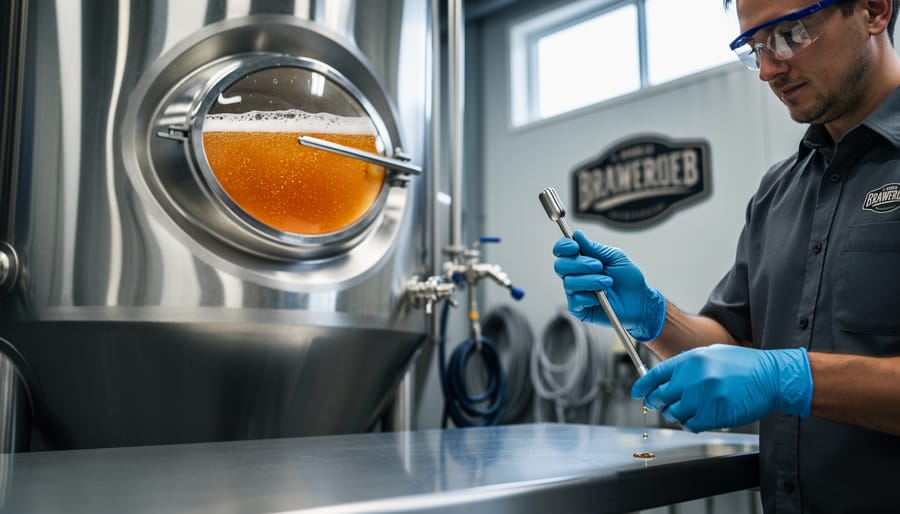
Interviewers zero in on fermentation because this is where homebrewing theory meets commercial reality. A common opener: “Walk me through how you’d manage fermentation for a 20-hectoliter batch of IPA.” They’re listening for specific gravity targets, pitch rates (typically 0.75-1 million cells per mL per degree Plato for ales), and how you’d adjust oxygen levels during transfer. The best answers reference real numbers from your homebrew logs.
Yeast health questions separate casual brewers from serious candidates. Expect: “How do you assess yeast viability before pitching?” or “What signs tell you a fermentation is stressed?” Strong responses mention cell counts, viability staining methods, and recognizing acetaldehyde or diacetyl precursors. Canadian breweries particularly value understanding cold-side practices given our climate, temperature control isn’t optional here.
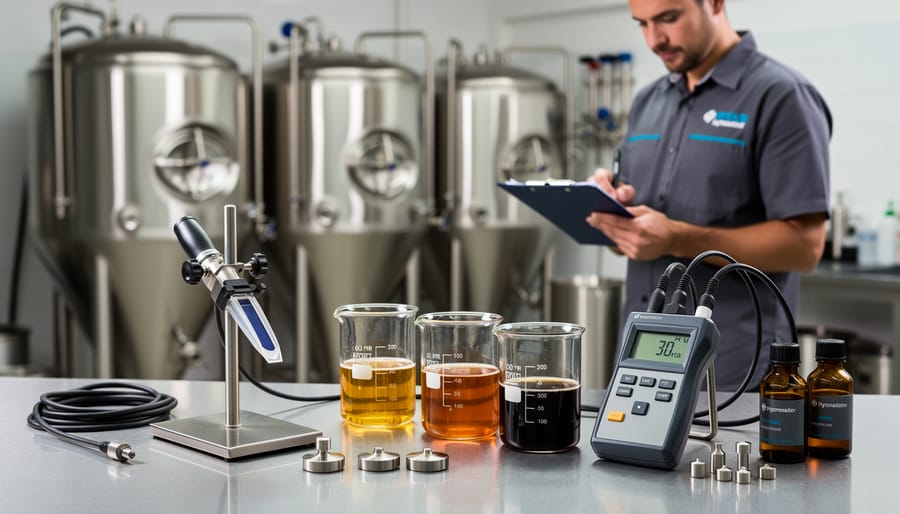
Quality control scenarios test your sensory skills and troubleshooting instincts. An interviewer might describe off-flavors, “This beer tastes like green apple and butter”, then ask you to diagnose the cause and prevention strategy. Acetaldehyde suggests insufficient conditioning time; diacetyl points to premature yeast removal or contamination. They want to hear you connect sensory perception to fermentation parameters.
Temperature management questions reveal whether you understand fermentation kinetics. “How would you handle a temperature spike during active fermentation?” isn’t about panic, it’s about controlled responses. Do you know that raising temperature near the end can help with diacetyl cleanup? Can you explain why lagers demand stricter temperature bands than ales?
Document every fermentation variable in your homebrew notes. Interviewers respect data-driven brewers who can cite specific examples from their own batches.
Equipment Operation and Sanitation
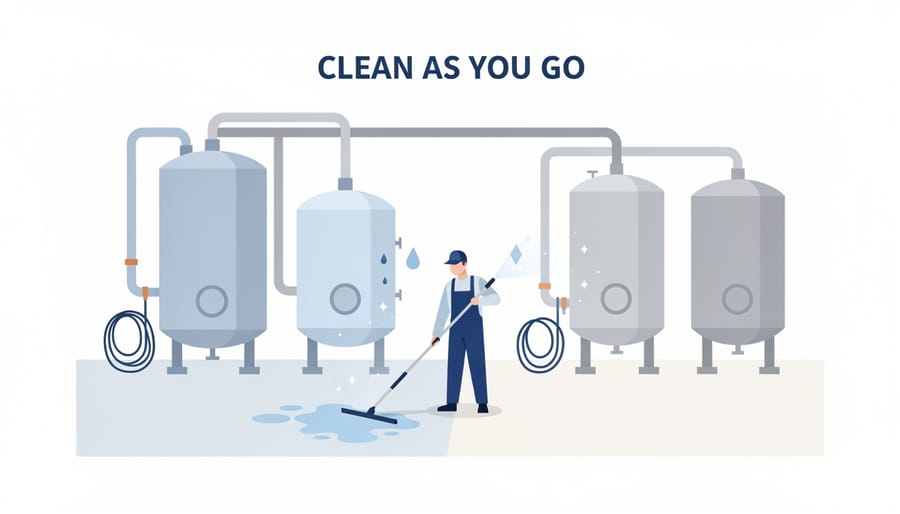
Interviewers often start with deceptively simple questions about your current homebrew setup before diving into how you’d handle commercial-scale equipment. “Walk me through your typical cleaning and sanitation routine” reveals whether you understand the difference between the two processes and their proper sequencing. The best answers demonstrate a methodical approach: cleaning first to remove physical debris and organic matter, then sanitizing to eliminate microorganisms.
Expect questions about scaling recipes and processes. “How would you adjust your 20-litre homebrew recipe for a 2,000-litre brewhouse?” tests your grasp of surface area-to-volume ratios, hop utilization changes, and boil-off rates at different scales. Simply multiplying by 100 doesn’t work, commercial systems extract bitterness more efficiently, require different mash tun configurations, and present unique cooling challenges.
Consistency questions separate casual homebrewers from those ready for professional environments. “Describe how you track and replicate your best batches” assesses your documentation habits and understanding of variables. Canadian brewers particularly appreciate candidates who mention water chemistry adjustments for seasonal source changes, something many homebrewers never consider until going commercial.
Sanitation protocol questions get specific: “What’s your approach to cleaning a stuck fermentation tank?” or “How would you sanitize transfer lines between batches?” Your answers should reference appropriate chemicals (caustic cleaners, acid washes, sanitizers), contact times, and temperature requirements. Mentioning CIP (clean-in-place) systems and understanding their limitations shows you’ve researched beyond homebrew equipment. Vague answers about “keeping things clean” won’t cut it when contamination can ruin entire production runs.
Scenario-Based Problem-Solving Questions
Scenario-based questions separate homebrewers who’ve only followed recipes from those who truly understand brewing processes. During interviews, these challenges test your ability to diagnose problems, propose solutions, and explain your reasoning under pressure, exactly what experts look for when evaluating candidates for commercial brewing roles.
You might face questions like: “You’re three hours into a brew day when your main kettle thermometer fails. What do you do?” or “A fermentation tank reading shows unexpected temperature spikes overnight. Walk me through your troubleshooting process.” These scenarios don’t have single correct answers. Interviewers want to see how you think, prioritize safety and quality, and draw on your homebrewing experience to solve problems you’ve likely never encountered at scale.
Another common challenge: “Your flagship IPA tastes different from the last batch, but all process parameters look normal. How do you identify the issue?” Strong candidates systematically eliminate variables, checking ingredient lot numbers, water reports, yeast viability, oxygen pickup during transfer, and even cleaning chemical residue. Weak answers jump to conclusions or ignore the possibility of ingredient variation.
The best responses demonstrate practical experience. When asked, “What would you do if your cooling system fails on a hot summer day with beer in the fermenter?” don’t just say “call maintenance.” Explain immediate actions: assessing current temperature, calculating time before temperature becomes problematic, considering glycol alternatives, evaluating whether to pitch yeast or hold off, and documenting everything for quality control.
Here’s how to structure your answers effectively:
- Acknowledge the immediate safety or quality concern, never skip straight to the fix without recognizing what’s at stake
- Outline your diagnostic process, explaining which variables you’d check first and why
- Propose practical solutions with clear rationale, including backup plans if your first approach doesn’t work
- Explain how you’d prevent recurrence and what you’d document for future reference
This framework shows methodical thinking rather than panic or guesswork. Interviewers often follow up with complications: “What if that solution isn’t available?” or “How would your approach change if this happened during packaging?” These curveballs test whether you truly understand brewing principles or just memorized responses.
Draw parallels to your homebrewing challenges. That time your fermentation chamber died mid-winter? How you salvaged a batch when your hydrometer broke? These stories prove you can adapt when things go wrong, which happens constantly in commercial brewing. Just translate the scale and consequences appropriately, a ruined five-gallon batch teaches lessons, but a failed 30-barrel brew represents serious financial loss.
Questions About Beer Styles and Creativity
Brewery interviewers probe your understanding of beer styles not through rote memorization of BJCP guidelines, but by asking you to explain what makes a particular style work and where you’d push its boundaries. Expect questions like “Walk me through designing a West Coast IPA that still feels relevant in 2026” or “How would you adapt a traditional German Altbier for Canadian palates?” These questions test whether you understand style fundamentals well enough to innovate without losing what makes that beer recognizable.
Recipe development questions dig into your decision-making process. You might hear “Describe a beer you’ve brewed that didn’t turn out as planned and what you learned” or “What’s a seasonal ingredient you’d love to work with and why?” Interviewers want to see that you think about ingredient interplay, not just throwing flavors together because they sound interesting. They’re assessing whether you can balance creativity with drinkability, the difference between a one-time novelty and a beer people actually want a second pint of.
Questions about commercial viability separate hobby brewers from those who understand the business. “How would you design a flagship beer that appeals to both craft beer enthusiasts and general consumers?” or “What’s your take on hazy IPAs versus clear West Coast styles for our market?” reveal whether you’ve thought beyond personal preference to consider production costs, shelf stability, and what actually sells in Canadian taprooms. Interviewers might ask about ABV decisions, ingredient sourcing from Canadian maltsters and hop growers, or how you’d keep production costs reasonable while maintaining quality.
The creativity questions that catch homebrewers off-guard often involve constraints: “Design a new beer using only ingredients we already have in inventory” or “Create something distinctive within our existing lineup without cannibalizing sales from our bestsellers.” These scenarios test practical creativity, working within real-world limitations while still producing something worth putting your name on.
Operational and Business-Focused Questions
Technical expertise gets you noticed, but business acumen gets you hired. Brewery interviews increasingly probe whether candidates understand margins, efficiency metrics, and operational realities. For homebrewers, this shift can feel uncomfortable, you learned brewing because you love beer, not spreadsheets. But commercial brewing is fundamentally a business that happens to make beer, and interviewers need to know you grasp that distinction.
Expect questions about cost per hectolitre and how you’d track it. “Walk me through the variable costs in a 1,000-litre batch of pale ale” tests whether you think beyond ingredient prices to include utilities, labour, packaging, and waste. Canadian breweries operate on thin margins, so demonstrating awareness of these metrics matters more than perfect calculation.
Production efficiency questions reveal how you’d handle commercial pressures. “How would you increase our brewhouse throughput without adding equipment?” requires understanding turn times, cleaning protocols, yeast repitching schedules, and how small adjustments compound across weeks. Interviewers want to see you think systematically about optimizing processes rather than just following recipes.
Inventory management questions assess practical commercial thinking. “Our hop cold storage is full, and we have a supplier delivery arriving in two days, what do you do?” has no single right answer, but strong candidates discuss forecasting usage, communication with suppliers, evaluating alternatives, and understanding how inventory ties up capital.
Expect situational questions about trade-offs. “A distributor wants 500 cases by Friday, but that means skipping quality checks on the current batch, how do you respond?” Homebrewers who’ve only brewed for themselves may instinctively say quality always wins, but professionals must articulate how they’d communicate timelines, manage expectations, and protect both product integrity and customer relationships. The best answers demonstrate you understand competing pressures rather than offering simplistic absolutes.
How to Prepare for Brewery Interview Questions
Preparing for brewery interviews starts months before you schedule them. Document every batch meticulously, note the challenges you faced, how you solved them, and what you’d do differently next time. Canadian brewing professionals emphasize that interviewers care less about perfect beers and more about your ability to identify problems, adjust processes, and learn from mistakes. Keep detailed records of your water chemistry adjustments, fermentation temperatures, and any recipe modifications. These specifics demonstrate the brewery-ready mindset that sets serious candidates apart.
Create a brewing portfolio that bridges hobby and professional contexts. Include photos of your setup, recipes with actual production notes, and sensory evaluation forms where you’ve honestly critiqued your own beers. Many successful Canadian brewers recommend bringing samples to interviews when appropriate, but always ask first. If you’ve collaborated with other homebrewers, entered competitions, or volunteered at local breweries, document these experiences with concrete examples of what you contributed and learned.
| Homebrewing Experience | Professional Requirement | How to Bridge the Gap |
|---|---|---|
| Brew 5-gallon batches | Understand commercial scaling | Calculate how recipes, timings, and processes change at larger volumes |
| Taste your own beers | Identify off-flavors systematically | Practice with BJCP guidelines and blind tastings with other brewers |
| Clean your equipment | Follow sanitation protocols | Research commercial CIP systems and document your cleaning procedures |
| Brew when convenient | Maintain production schedules | Track your brew day efficiency and identify bottlenecks in your process |
Practice articulating your homebrewing journey in professional terms. Instead of saying you’ve brewed for five years, explain how you’ve systematically developed skills in water chemistry, yeast management, and recipe formulation. Be ready to discuss specific batches where things went wrong and what you learned. Frame your hobby experiences using industry language: talk about your fermentation schedule, not just when you bottled; discuss your quality control checks, not just whether it tasted good. Canadian brewers consistently report that candidates who translate passion into process knowledge stand out immediately.
Common Questions to Ask as the Interviewee
Turning the interview around shows you’re thinking beyond just landing a position, you’re evaluating whether this brewery deserves your skills and passion. Start by asking about their approach to recipe development and creative freedom. “How does your team handle new recipe ideas?” reveals whether you’ll have input or just follow established protocols. This matters enormously for homebrewers accustomed to experimenting freely.
Quality and process questions demonstrate your commitment to excellence. Ask about their quality control measures, how they handle off-batches, and what training they provide for new brewing staff. “What’s your approach to continuous improvement?” shows you’re focused on growth, not just clocking in.
Understanding brewery culture prevents mismatched expectations. Questions about team dynamics, communication styles during busy production periods, and how they balance production demands with experimentation tell you whether their environment suits your working style. Canadian craft breweries vary wildly in culture, from militant precision to laid-back creativity, and neither is wrong, just different.
Get specific about the practical realities. Ask about shift schedules, physical demands, seasonal production cycles, and how they handle unexpected issues like equipment failures. “Walk me through a typical brew day” provides concrete details beyond job descriptions. Also inquire about their ingredient sourcing philosophy and relationships with local farmers or maltsters, many Canadian homebrewers care deeply about supporting regional suppliers.
The art of asking better questions during interviews separates candidates who just want any brewing job from those building meaningful careers. Your questions should demonstrate you’ve researched their beers, understand their market position, and are genuinely curious about their approach rather than simply seeking employment.
Frequently Asked Questions
Do I need formal brewing education to work at a brewery in Canada?
Not necessarily. Many Canadian breweries value practical homebrewing experience and demonstrated knowledge over formal credentials, though programs like Niagara College’s Brewmaster program or Olds College’s Brewery Operations can strengthen applications. What matters most is your ability to discuss brewing processes confidently and show consistent results.
How much professional experience do breweries typically expect?
Entry-level positions often require none beyond documented homebrewing experience. Many breweries prefer hiring passionate homebrewers they can train over experienced brewers with bad habits. Starting as a packaging assistant or cellar worker while demonstrating your knowledge is a common path.
Should I bring beer samples to an interview?
Opinions vary among Canadian breweries. Some appreciate tasting your work; others consider it presumptuous. If you do bring samples, include well-documented brewing notes and be prepared to discuss what you’d do differently next time, humility and self-awareness matter more than perfection.
What makes a homebrewer stand out in brewery interviews?
Detailed brewing records showing you track variables, adjust recipes, and learn from mistakes set you apart. Demonstrating understanding of commercial constraints, ingredient costs, production schedules, consistency requirements, shows you’ve thought beyond hobby brewing.
Beyond these common concerns, homebrewers often wonder about the physical demands of brewery work. Professional brewing involves heavy lifting, long hours on your feet, working in temperature extremes, and repetitive cleaning tasks that don’t exist at homebrew scale. Interviewers appreciate candidates who acknowledge these realities rather than romanticizing the work.
The question of competition entries comes up frequently. While awards validate your skills, they’re not essential. What interviewers care about is whether you understand why your beer won or lost, did you identify the characteristics judges valued, and can you replicate them consistently? That analytical approach matters more than medals.
Timing your transition also concerns many homebrewers. Most Canadian breweries hire seasonally, with spring and early summer seeing increased demand before peak production. Building relationships through volunteering at local breweries during events or asking about internship opportunities creates pathways that formal applications alone can’t.
Remember that brewery interviews work both ways. You’re evaluating whether the brewery’s culture, production style, and growth trajectory match your brewing philosophy and career aspirations. The best brewery jobs come from mutual fit, not desperation to break into the industry.
Whether you’re eyeing a brewmaster position or committed to your garage setup, these interview questions serve a purpose beyond career preparation. They’re a roadmap to brewing excellence. Every question about water chemistry, fermentation control, or recipe scaling points toward skills that separate good homebrewers from great ones.
Use these questions as a personal audit. Can you explain your water adjustments with confidence? Do you track fermentation metrics consistently? When a batch goes sideways, can you diagnose the problem systematically? The ability to articulate these processes, whether to an interviewer or a fellow brewer at your local homebrew club, reflects deeper mastery of your craft.
The Canadian brewing community thrives because homebrewers continuously push their skills forward. Some eventually join commercial operations, bringing fresh perspectives. Others remain dedicated hobbyists who mentor newcomers and share innovations. Both paths contribute equally to our collective knowledge. By understanding what professionals expect, you elevate your own standards and strengthen the connections that make Canadian craft brewing special.
Keep brewing, keep learning, and remember that every question you can answer confidently represents another breakthrough in your journey from following recipes to truly understanding beer.